
Jumla: Sourcing Food Supply, Made Easy.

Jumla: Sourcing Food Supply, Made Easy.

Jumla: Sourcing Food Supply, Made Easy.

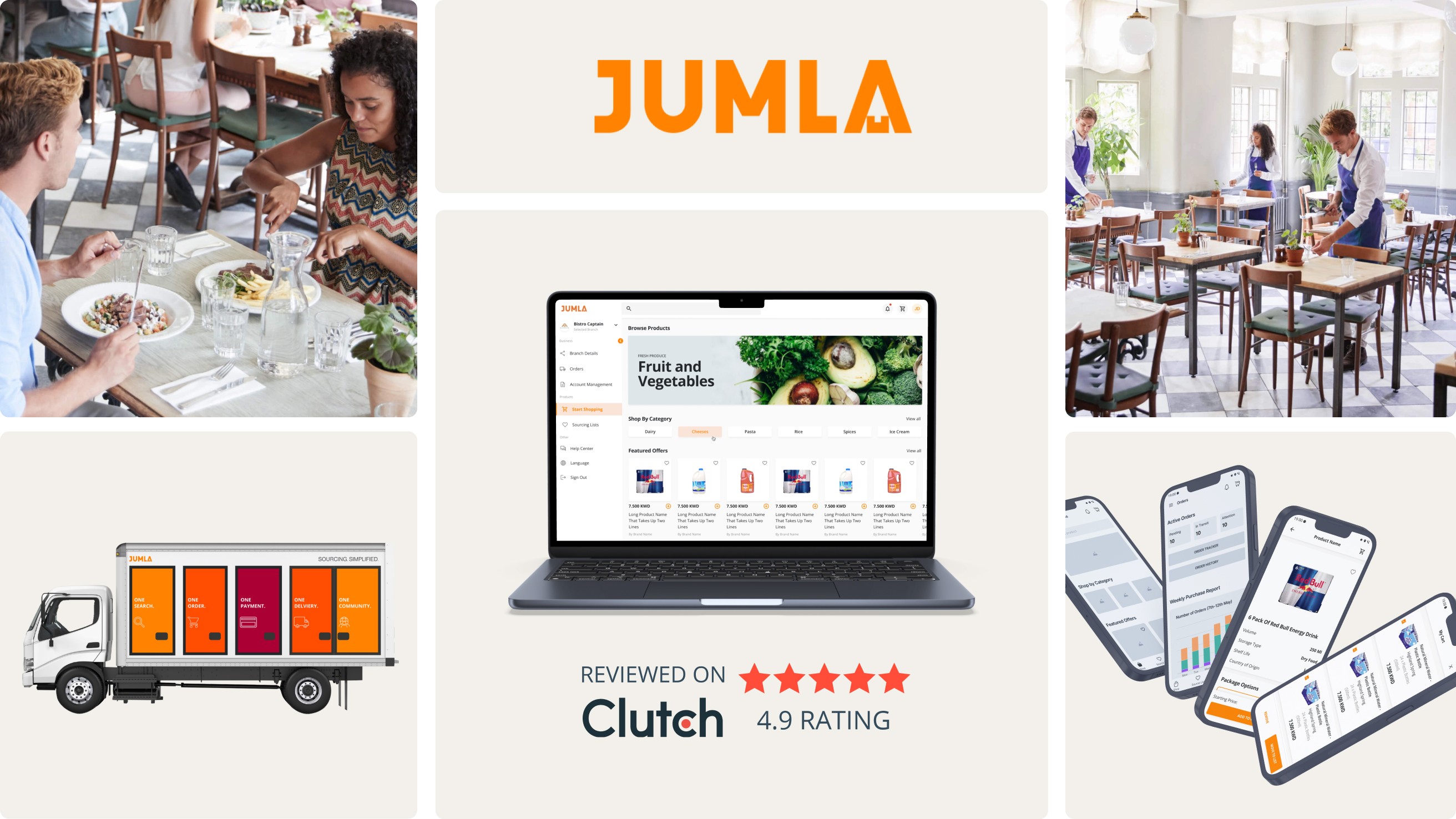
Jumla is the leading B2B e-commerce distributor of food, beverages, and consumables for the hospitality industry in Kuwait and Dubai.

Jumla is the leading B2B e-commerce distributor of food, beverages, and consumables for the hospitality industry in Kuwait and Dubai.

Ecommerce

🇦🇪 UAE Client

App

Dashboard

Landing Page

Date

2022

Role

Senior Designer

Website

Problem statement

Problem statement

Problem statement

Jumla was built using a feature-led approach, with product decisions driven primarily by engineering and stakeholder assumptions rather than user needs. Over time, this resulted in a complex product with declining performance across key areas. The main challenges identified were low signup completion, reduced repeat purchases, operational issues caused by supplier price and availability management, mobile scalability concerns raised by investors, and increasing competitive pressure from simpler, better-designed alternatives.

Jumla was built using a feature-led approach, with product decisions driven primarily by engineering and stakeholder assumptions rather than user needs. Over time, this resulted in a complex product with declining performance across key areas. The main challenges identified were low signup completion, reduced repeat purchases, operational issues caused by supplier price and availability management, mobile scalability concerns raised by investors, and increasing competitive pressure from simpler, better-designed alternatives.

Jumla was built using a feature-led approach, with product decisions driven primarily by engineering and stakeholder assumptions rather than user needs. Over time, this resulted in a complex product with declining performance across key areas. The main challenges identified were low signup completion, reduced repeat purchases, operational issues caused by supplier price and availability management, mobile scalability concerns raised by investors, and increasing competitive pressure from simpler, better-designed alternatives.

Research and Analysis

Research and Analysis

I used a mix of qualitative and quantitative research to identify the main friction points and behavioural patterns affecting signup, repeat purchases, and supplier workflows. These findings shaped the design direction by clarifying which problems to prioritise and which assumptions needed to be challenged before moving into solution design.

Competitor Analysis

Competitor Analysis

Competitor Analysis

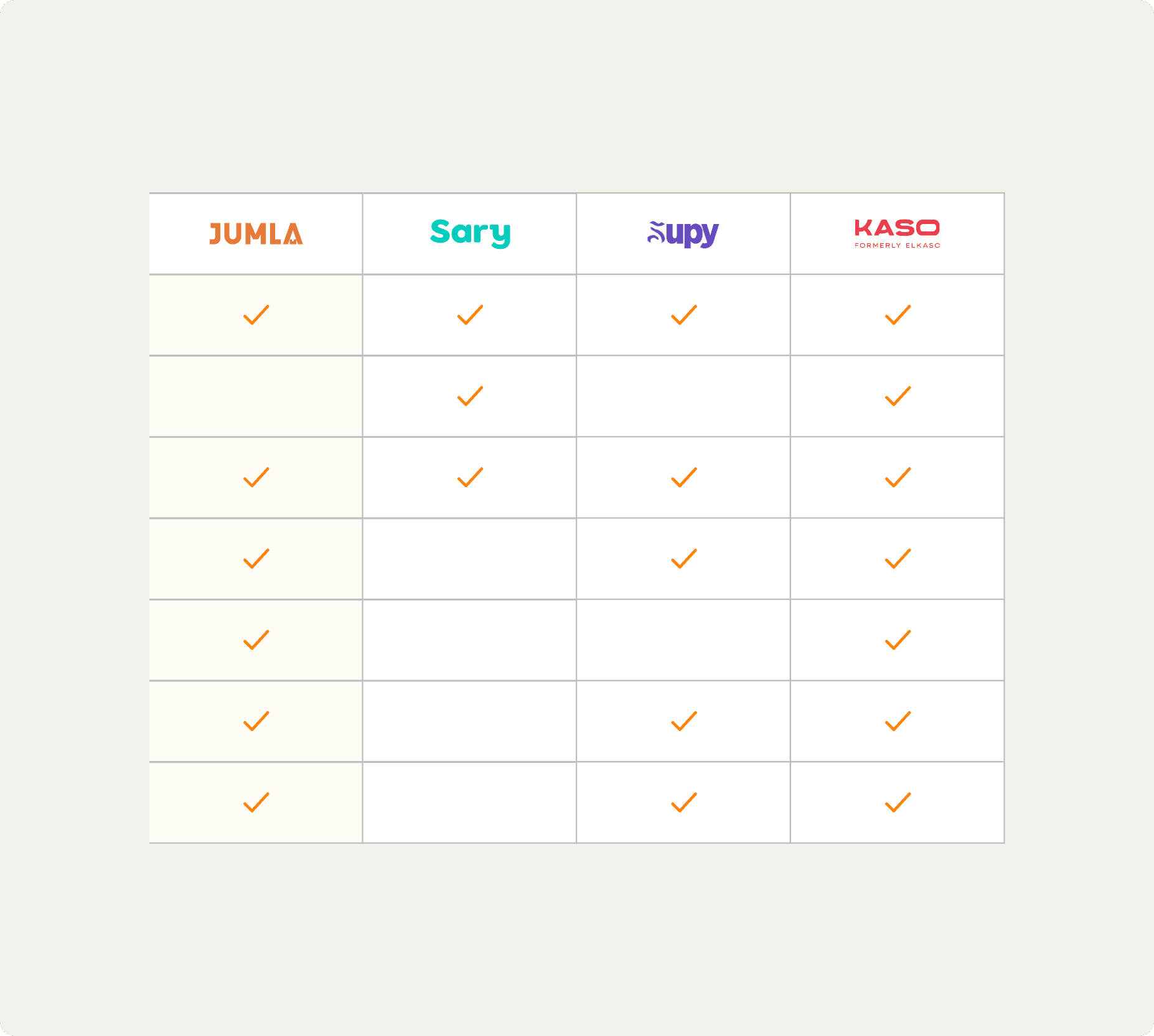
We compared key competitor experiences across five areas—landing page, onboarding, shopping flow, notifications, and overall UI—to identify usability patterns and gaps. This analysis highlighted where competitors offered simpler, more focused experiences and informed decisions on what to simplify or remove in Jumla.

We compared key competitor experiences across five areas—landing page, onboarding, shopping flow, notifications, and overall UI—to identify usability patterns and gaps. This analysis highlighted where competitors offered simpler, more focused experiences and informed decisions on what to simplify or remove in Jumla.

We compared key competitor experiences across five areas—landing page, onboarding, shopping flow, notifications, and overall UI—to identify usability patterns and gaps. This analysis highlighted where competitors offered simpler, more focused experiences and informed decisions on what to simplify or remove in Jumla.

User Personas

User Personas

User Personas

  1. Consumer Branch Manager: Responsible for sourcing goods across multiple restaurants, with a focus on reliable availability and timely delivery.


  2. Seller Branch Manager: Manages product listings, pricing, and stock availability, while responding to buyer enquiries to support purchasing decisions.

  3. Seller Account Manager: Acts as the primary contact with Jumla, ensuring account details, compliance, and ongoing operational requirements are maintained.
User Journeys

User Journeys

User Journeys

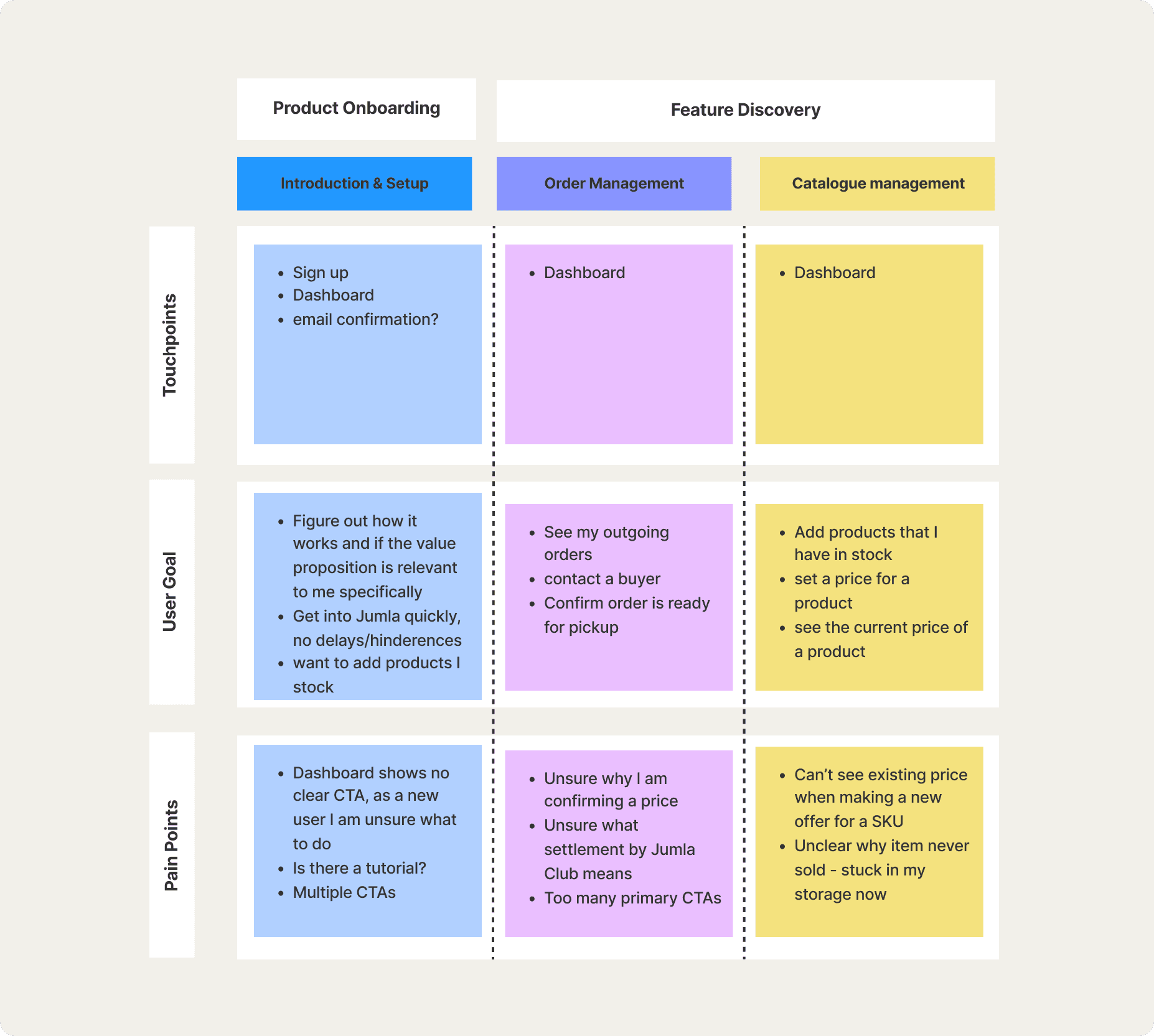
We mapped user journeys for both buyers and sellers, breaking each flow down by feature to capture key touchpoints, user goals, and pain points. This helped clarify where friction occurred across the journey and informed which features required simplification or restructuring.

We mapped user journeys for both buyers and sellers, breaking each flow down by feature to capture key touchpoints, user goals, and pain points. This helped clarify where friction occurred across the journey and informed which features required simplification or restructuring.

We mapped user journeys for both buyers and sellers, breaking each flow down by feature to capture key touchpoints, user goals, and pain points. This helped clarify where friction occurred across the journey and informed which features required simplification or restructuring.

Behavioural insights

Behavioural insights

Behavioural insights

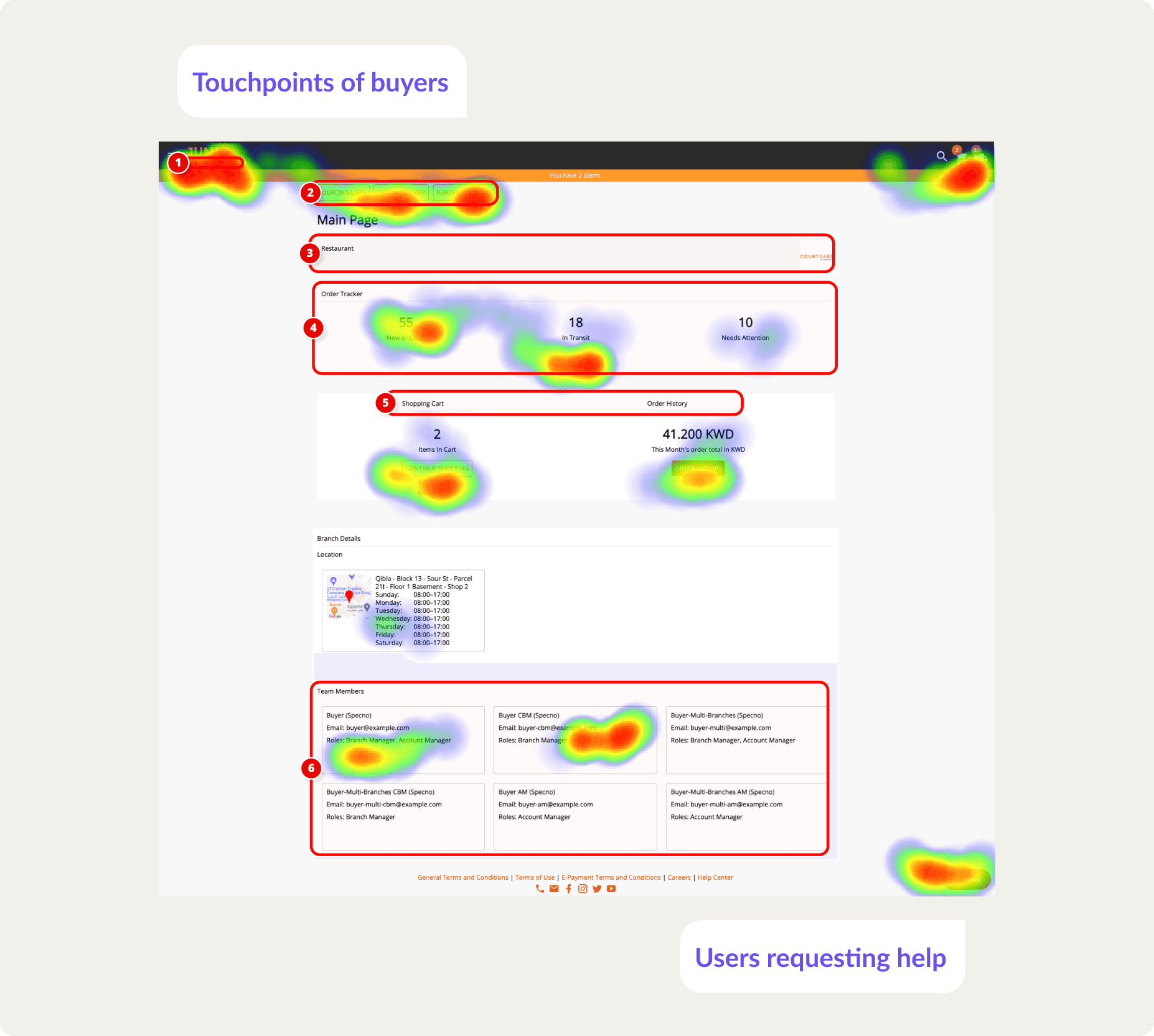
We used Hotjar heatmaps to identify areas of friction in the Jumla experience. Key issues included help content failing to support new users, unfamiliar UI patterns causing navigation issues, and alerts and messages being consistently overlooked.

We used Hotjar heatmaps to identify areas of friction in the Jumla experience. Key issues included help content failing to support new users, unfamiliar UI patterns causing navigation issues, and alerts and messages being consistently overlooked.

Summary of findings

Summary of findings

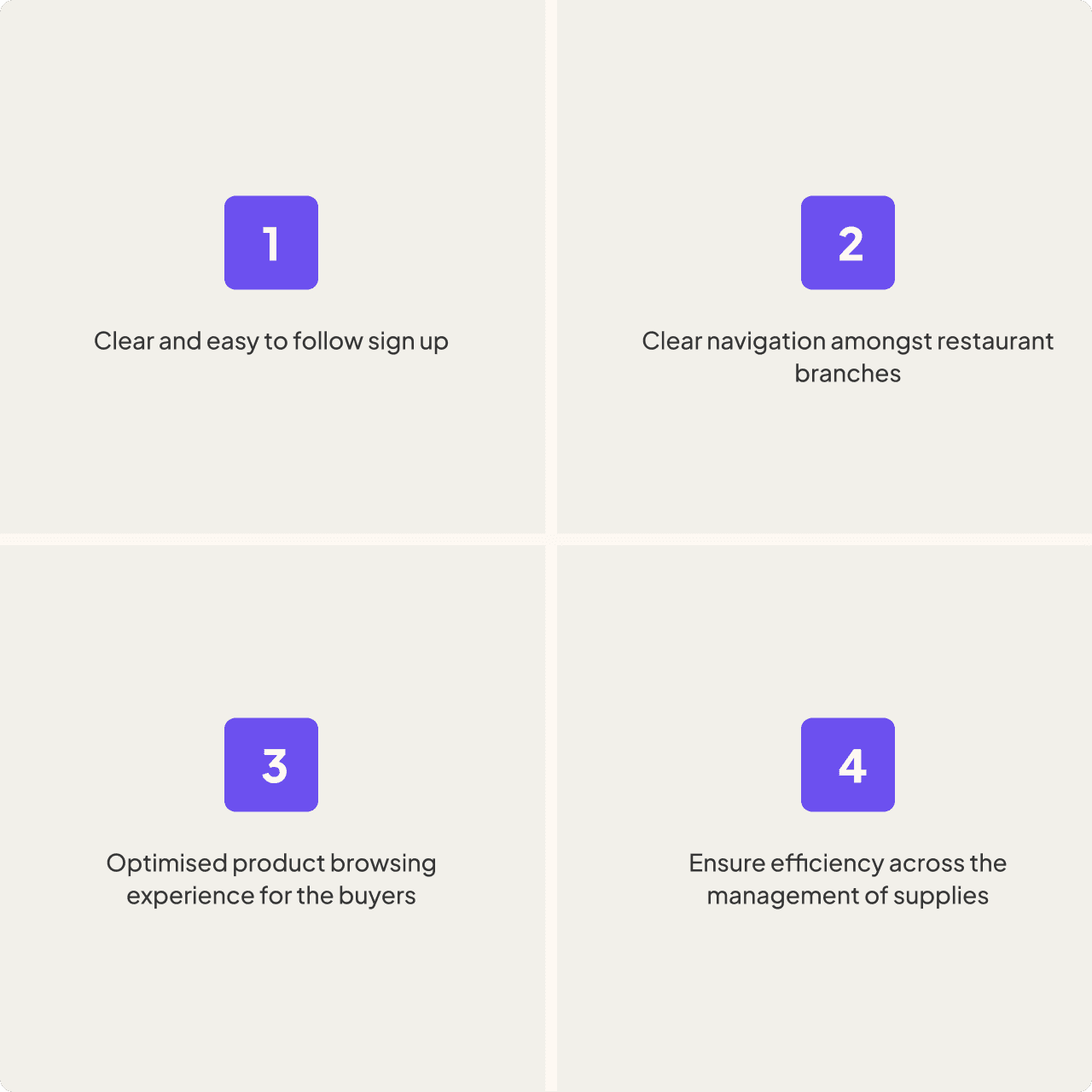
We compared competitor experiences against Jumla to identify gaps affecting conversion and usability. The key findings were:

We compared competitor experiences against Jumla to identify gaps affecting conversion and usability. The key findings were:

Jumla lacked a clear onboarding flow, with limited guidance placed behind the sign-up barrier.

Jumla lacked a clear onboarding flow, with limited guidance placed behind the sign-up barrier.

Core functionality from the shopping experience, such as product browsing and search filtering was missing or underdeveloped.

Core functionality from the shopping experience, such as product browsing and search filtering was missing or underdeveloped.

Competing calls to action created visual noise, reducing clarity on the primary next step.

Competing calls to action created visual noise, reducing clarity on the primary next step.

Heuristic Evaluation

Heuristic Evaluation

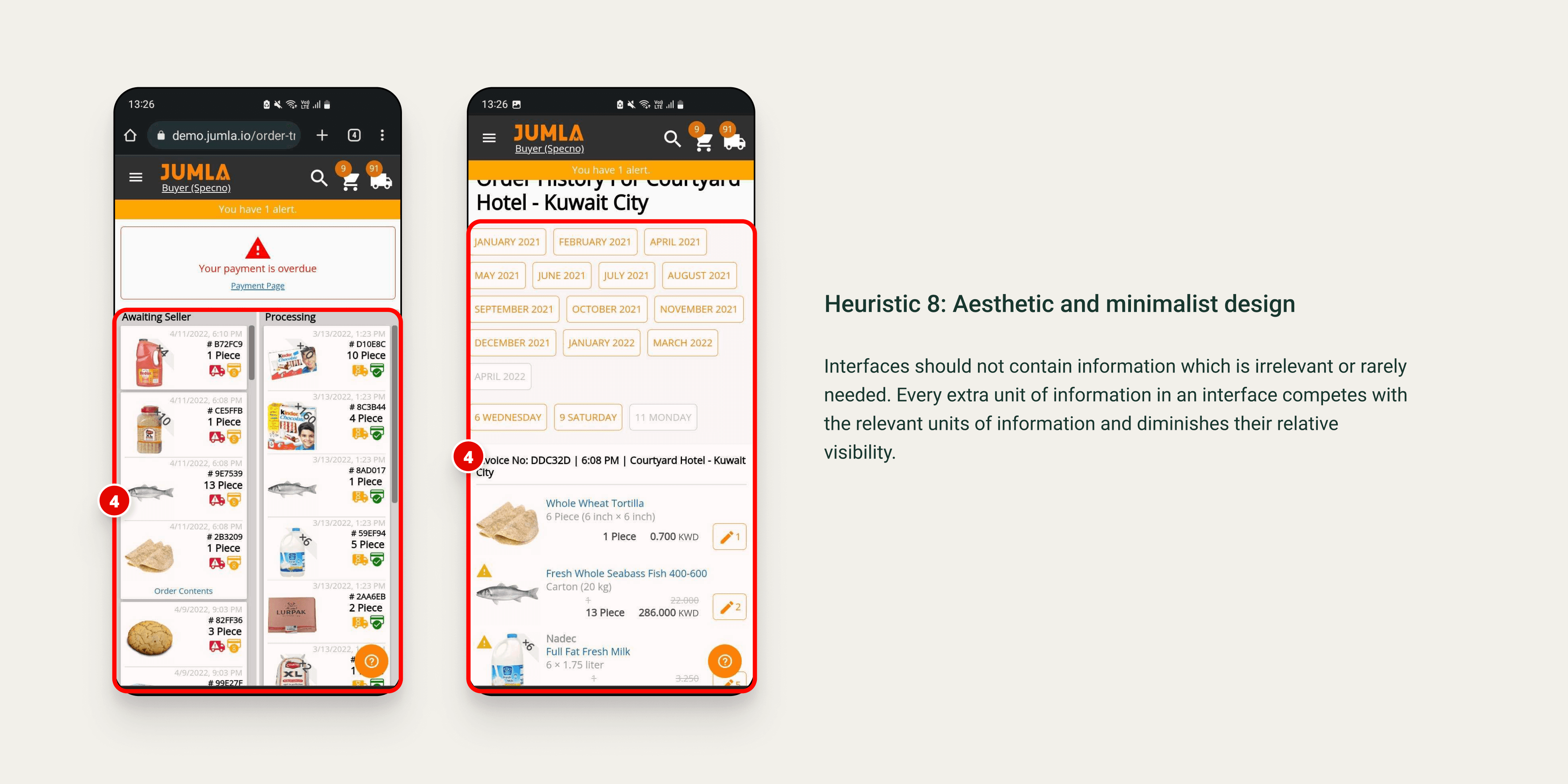
We evaluated the platform against established usability principles, identifying over 100 issues across navigation, feedback, and search. Key findings included:

  • Heuristic 1 (Visibility of system status):

    Overdue payments were shown via a banner, but tapping the banner led to no action, breaking user expectations.

  • Heuristic 2 (Match between the system and real world):

    Navigation was split between the dashboard and side menu, forcing users to repeatedly backtrack to change routes.

  • Heuristic 6 (Recognition over recall):

    Search lacked filtering and browsing support, requiring users to remember exact product names instead of recognising options.
Wireframes

Wireframes

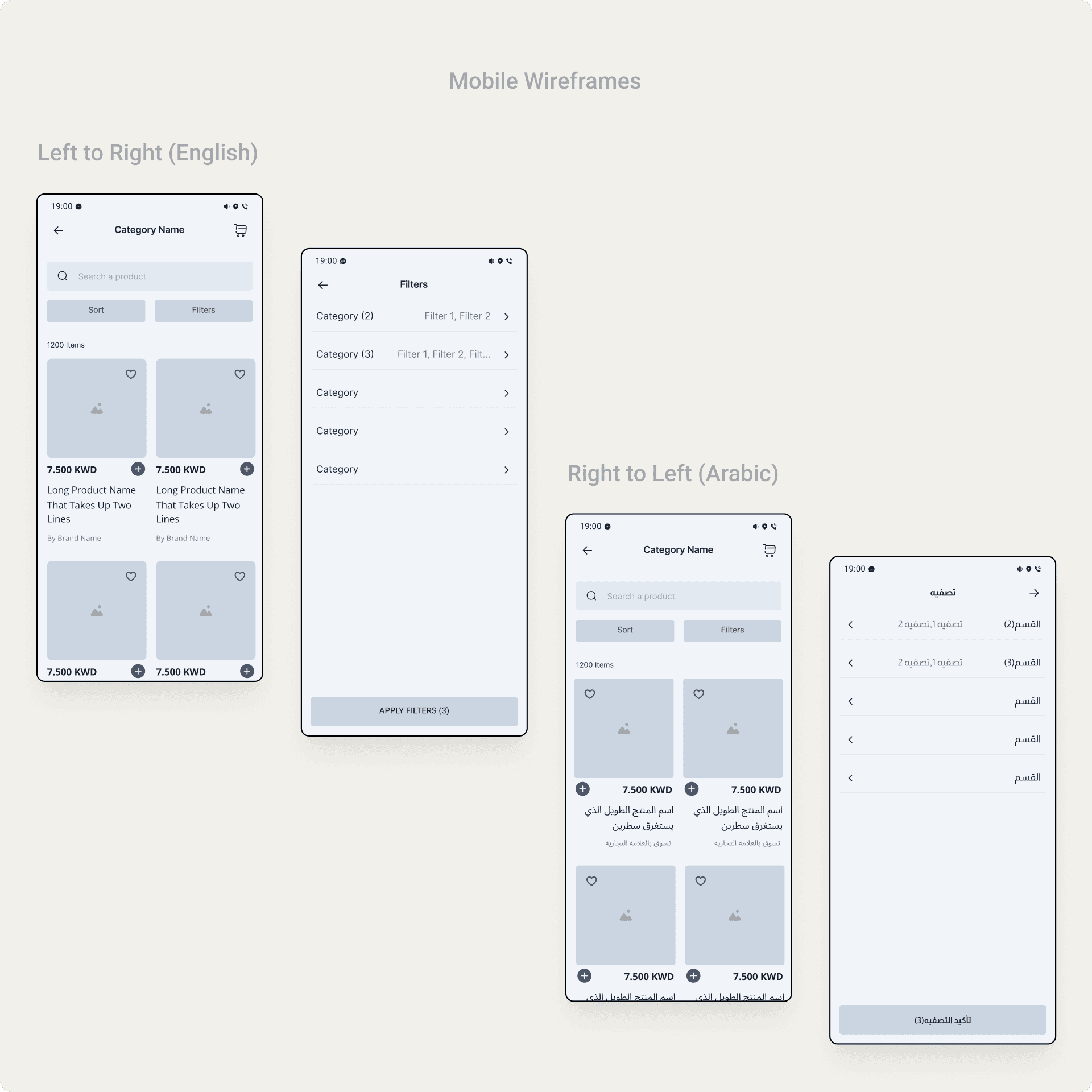
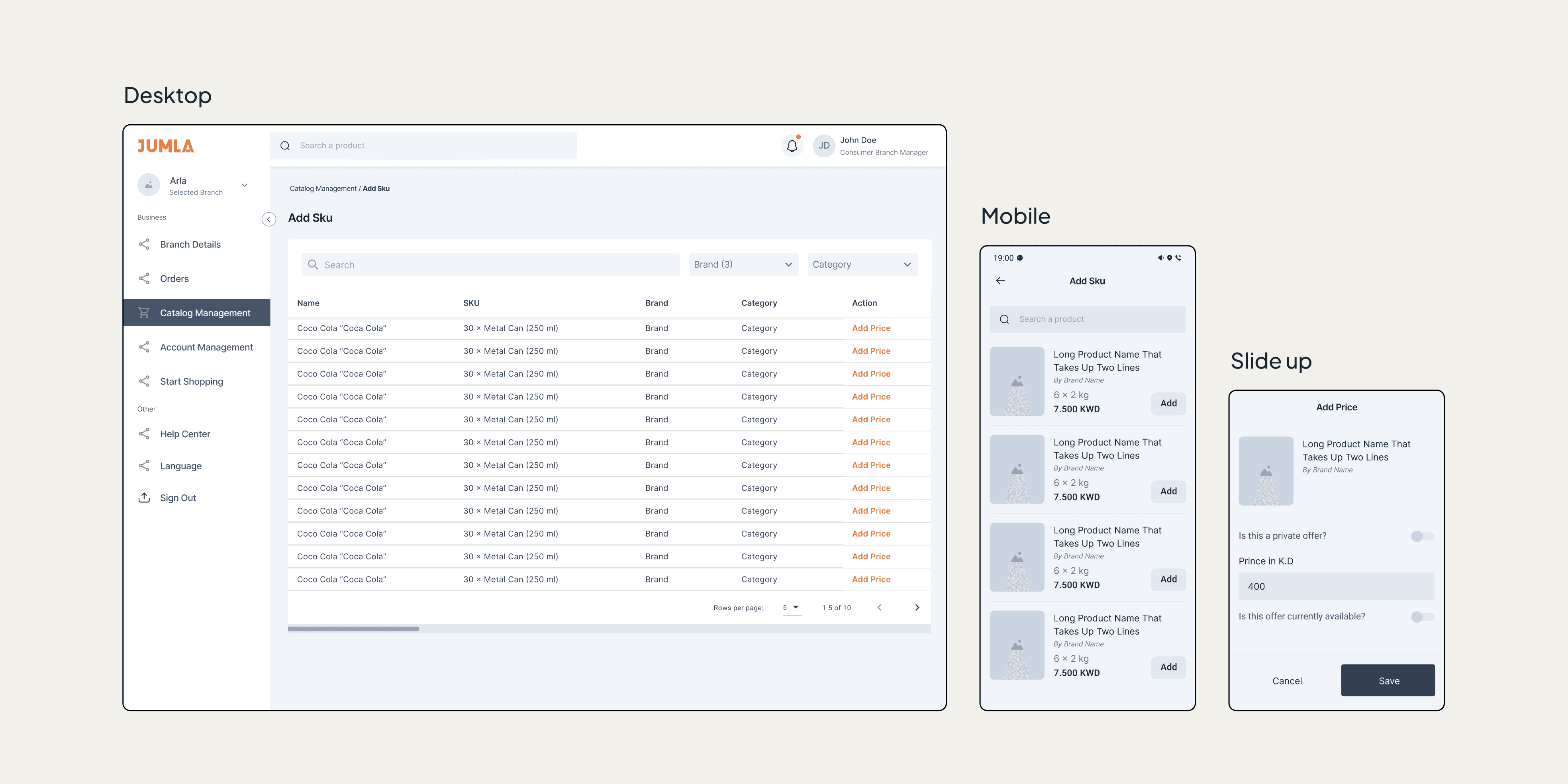
We mapped key flows with stakeholders, focusing early on how desktop-first layouts would translate to mobile. A major constraint was that table-heavy desktop designs did not scale effectively to smaller screens. Rather than replicating these patterns on mobile, we designed custom components that simplified information hierarchy and avoided horizontal scrolling. The example below shows how the SKU creation flow was adapted from a table-based view into a mobile-friendly layout.

We mapped key flows with stakeholders, focusing early on how desktop-first layouts would translate to mobile. A major constraint was that table-heavy desktop designs did not scale effectively to smaller screens. Rather than replicating these patterns on mobile, we designed custom components that simplified information hierarchy and avoided horizontal scrolling. The example below shows how the SKU creation flow was adapted from a table-based view into a mobile-friendly layout.

We mapped key flows with stakeholders, focusing early on how desktop-first layouts would translate to mobile. A major constraint was that table-heavy desktop designs did not scale effectively to smaller screens. Rather than replicating these patterns on mobile, we designed custom components that simplified information hierarchy and avoided horizontal scrolling. The example below shows how the SKU creation flow was adapted from a table-based view into a mobile-friendly layout.

We mapped key flows with stakeholders, focusing early on how desktop-first layouts would translate to mobile. A major constraint was that table-heavy desktop designs did not scale effectively to smaller screens. Rather than replicating these patterns on mobile, we designed custom components that simplified information hierarchy and avoided horizontal scrolling. The example below shows how the SKU creation flow was adapted from a table-based view into a mobile-friendly layout.

Designs.

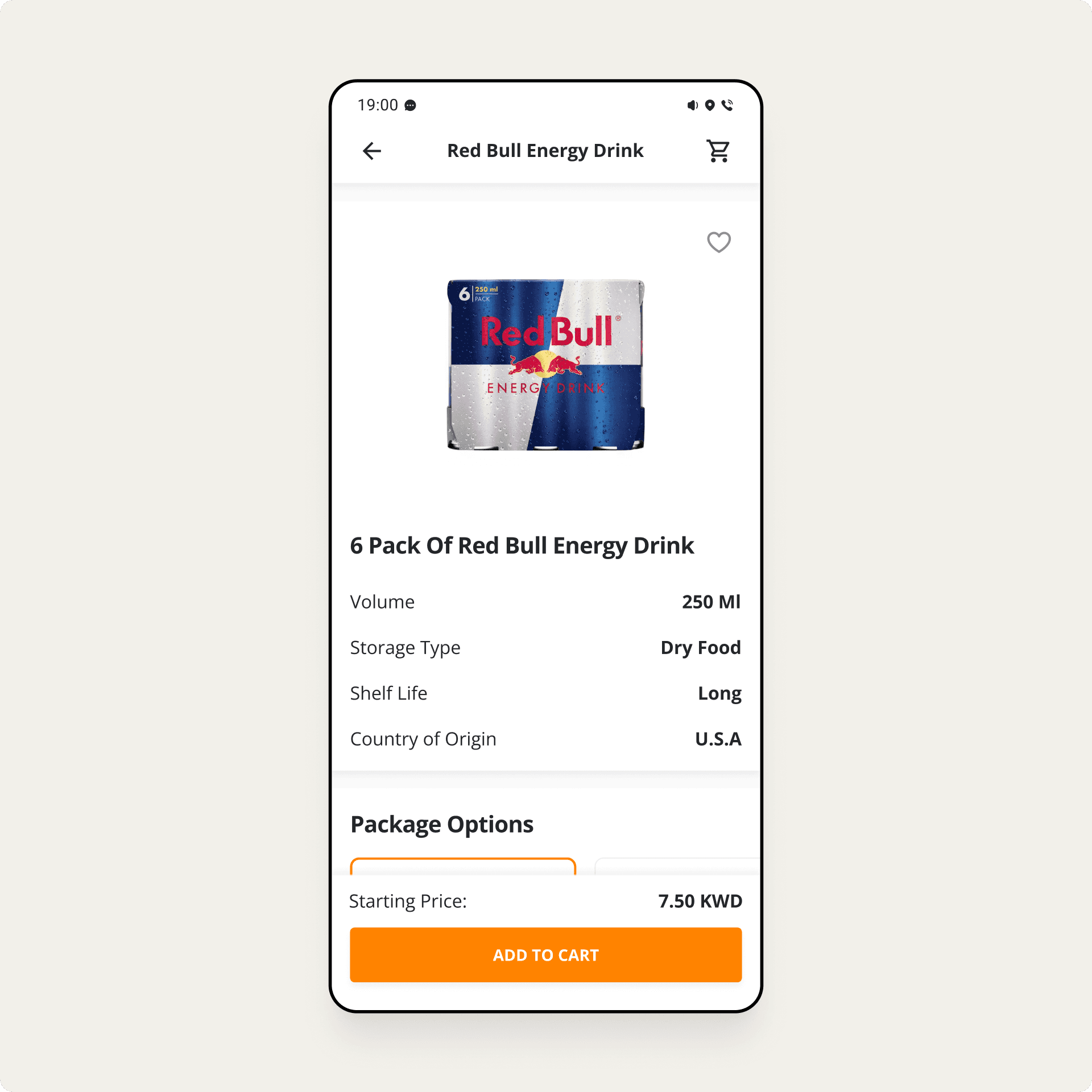
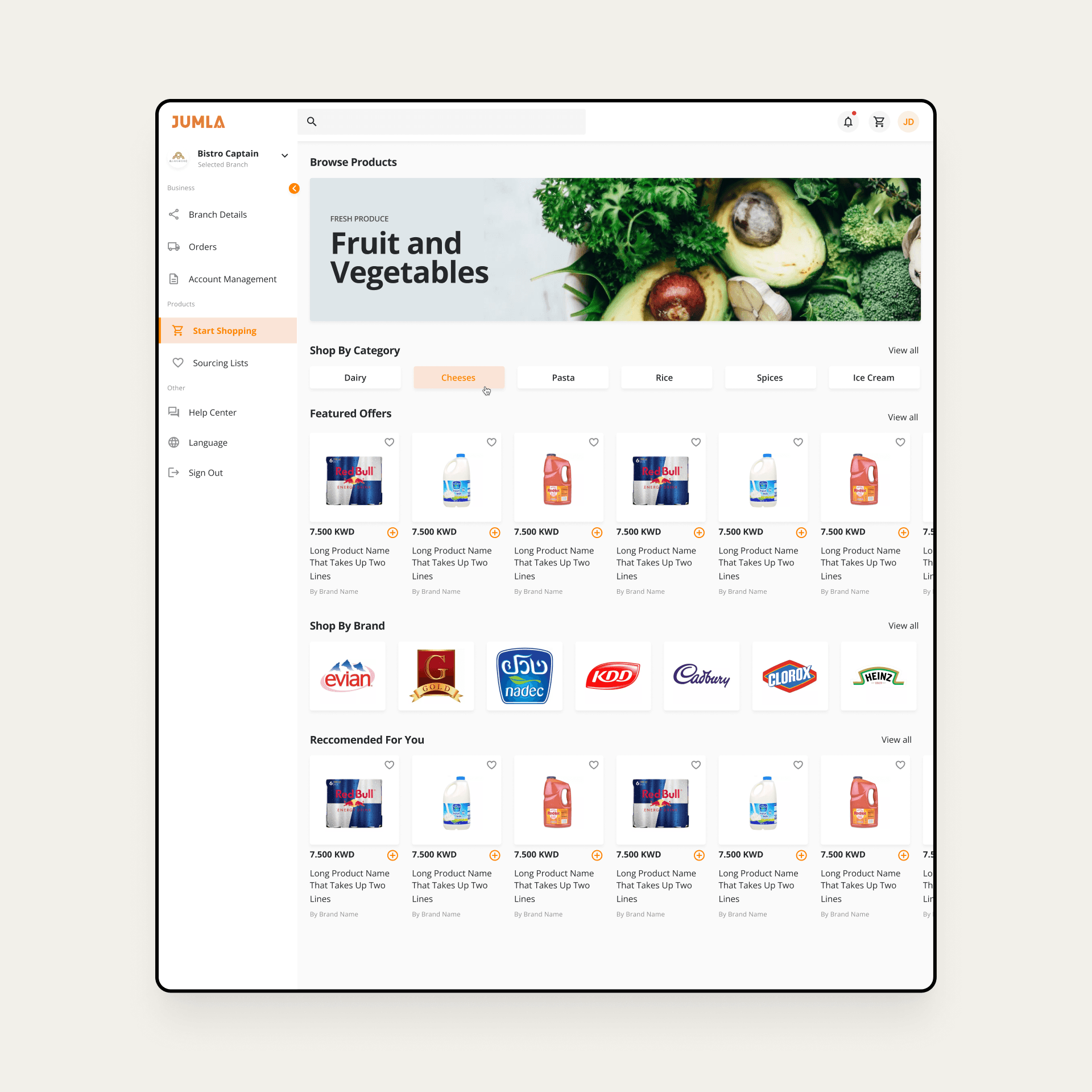
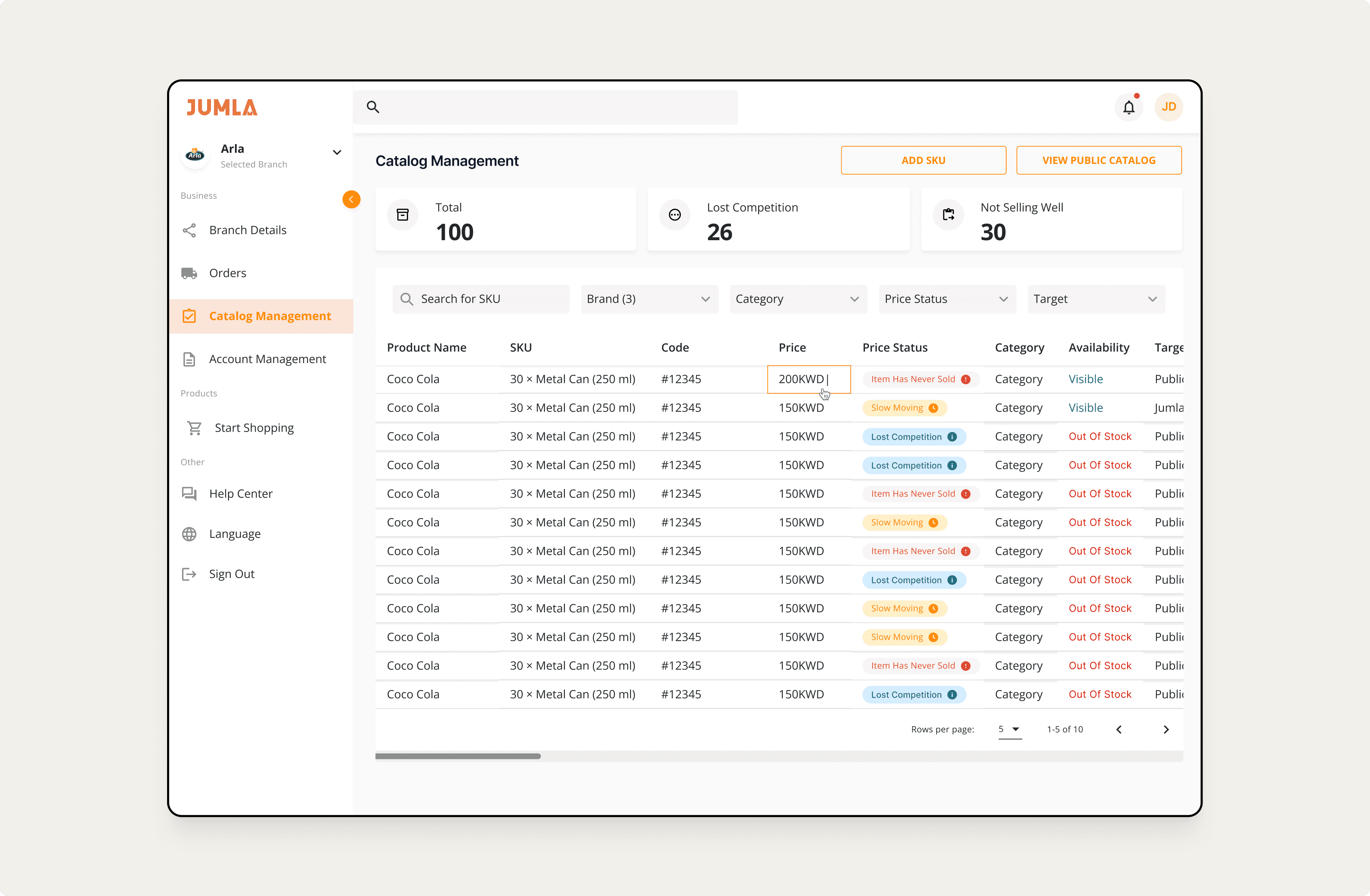
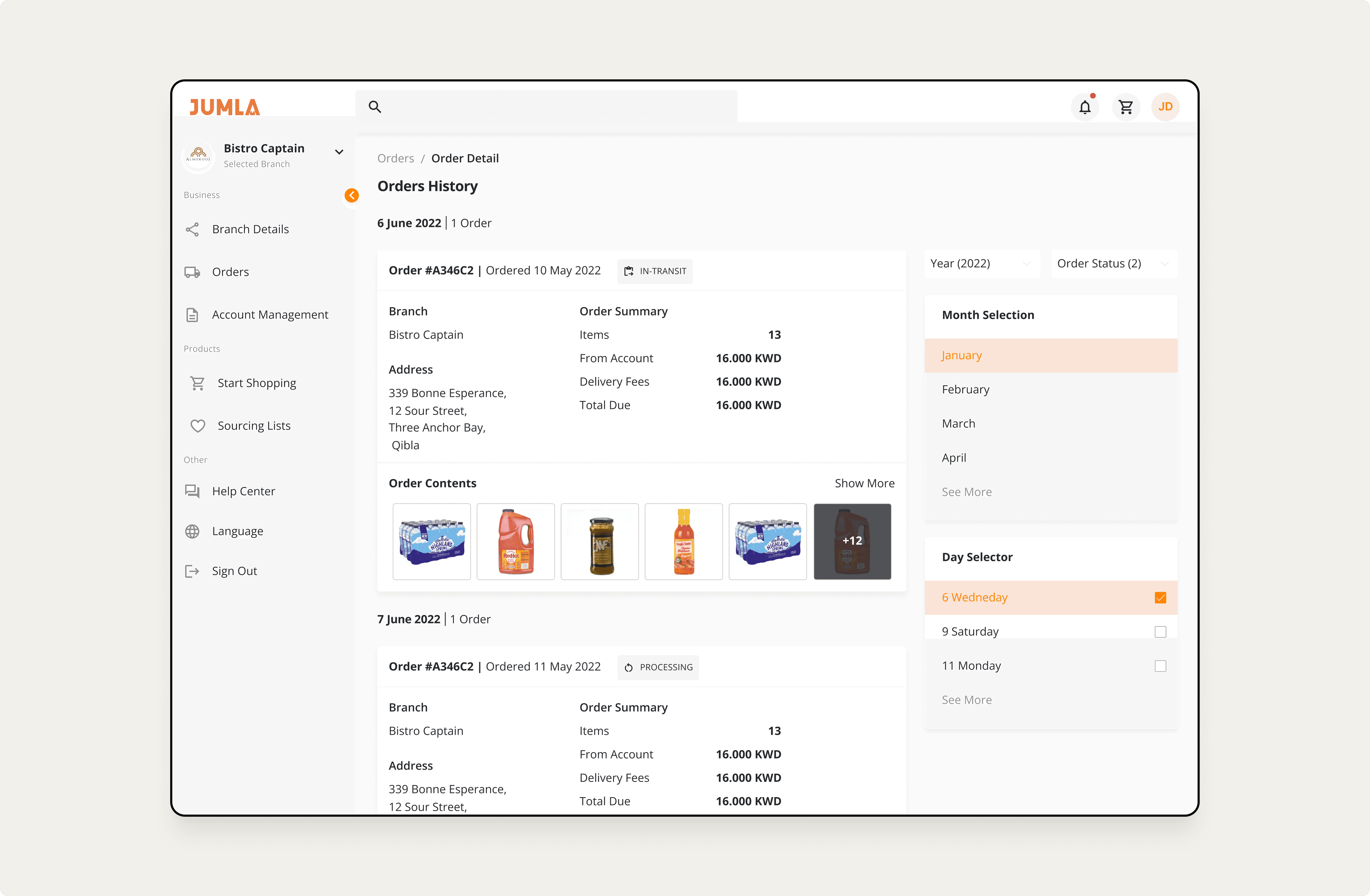
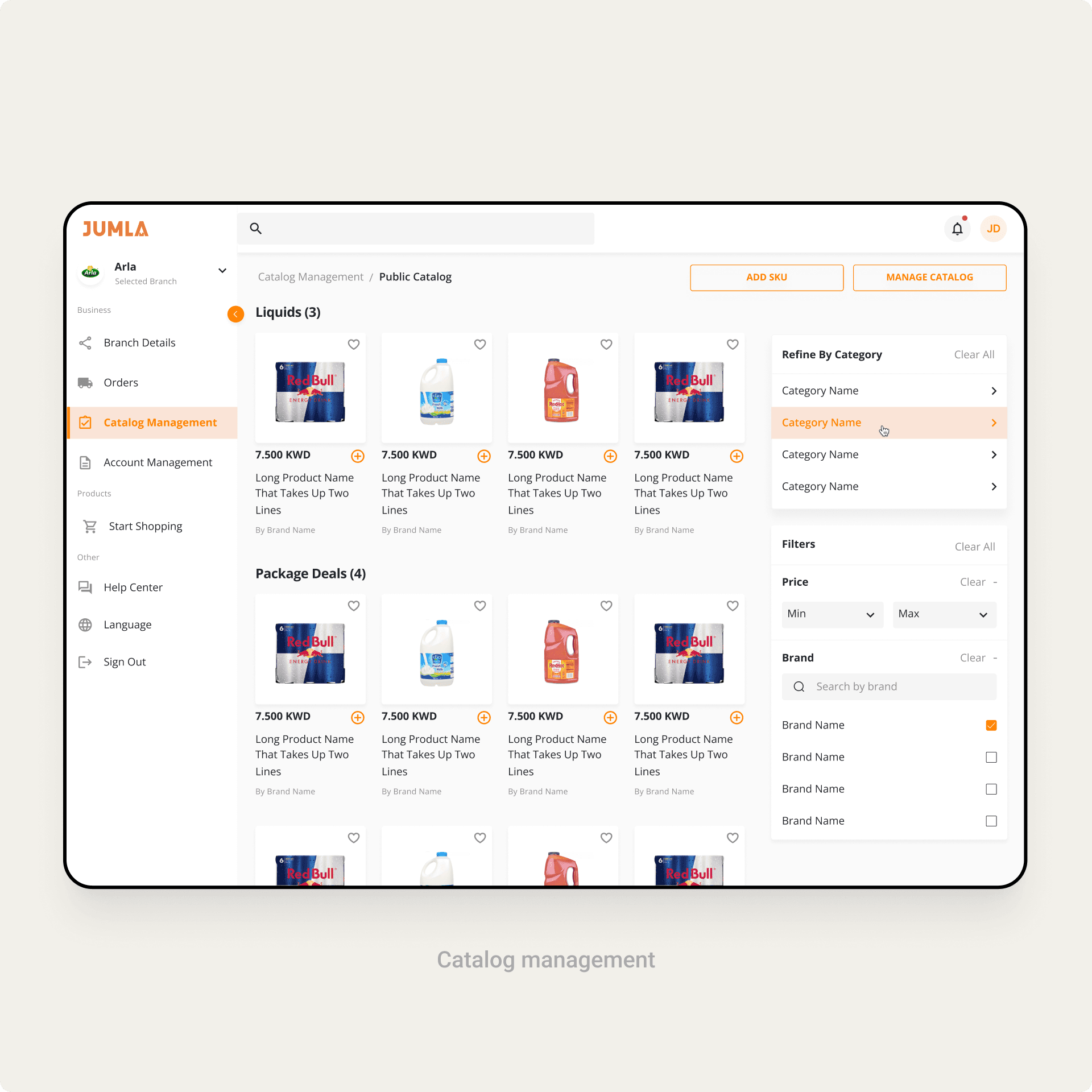
The screens below highlight key moments across the Jumla experience, focusing on clarity, task efficiency, and mobile-first decision-making. They reflect how complex workflows were simplified without losing essential functionality.

The screens below highlight key moments across the Jumla experience, focusing on clarity, task efficiency, and mobile-first decision-making. They reflect how complex workflows were simplified without losing essential functionality.

"Special thanks to the Ryan and the team, there was positive internal feedback on the designs and UX of the platform. The team was highly collaborative and responsive. Ryan’s involvement and suggestions were impressive."

Richard Johnson

CTO, Jumla

"Special thanks to the Ryan and the team, there was positive internal feedback on the designs and UX of the platform. The team was highly collaborative and responsive. Ryan’s involvement and suggestions were impressive."

Richard Johnson

CTO, Jumla

"Special thanks to the Ryan and the team, there was positive internal feedback on the designs and UX of the platform. The team was highly collaborative and responsive. Ryan’s involvement and suggestions were impressive."

Richard Johnson

CTO, Jumla

"Special thanks to the Ryan and the team, there was positive internal feedback on the designs and UX of the platform. The team was highly collaborative and responsive. Ryan’s involvement and suggestions were impressive."

Richard Johnson

CTO, Jumla

Project highlights

Project highlights

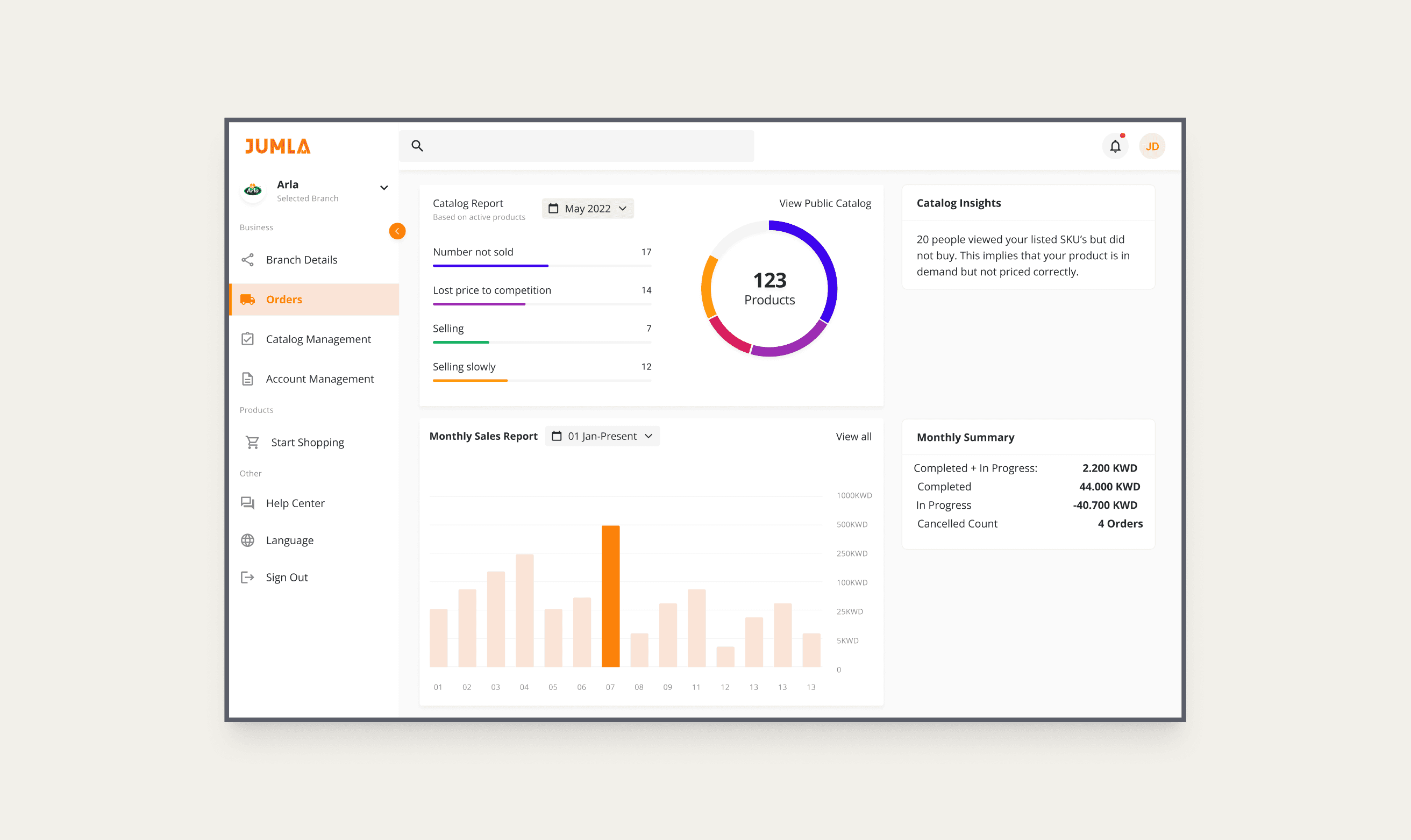
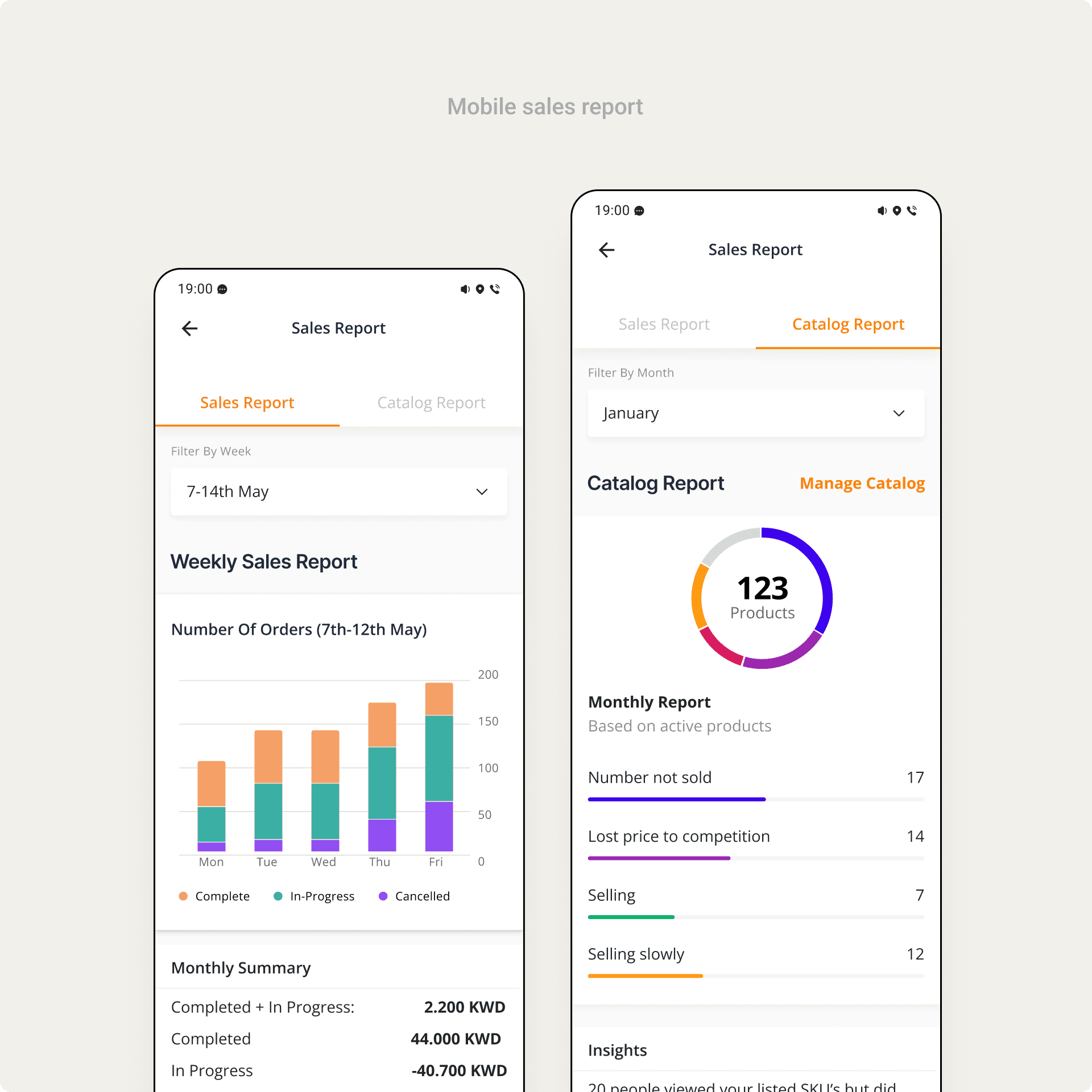
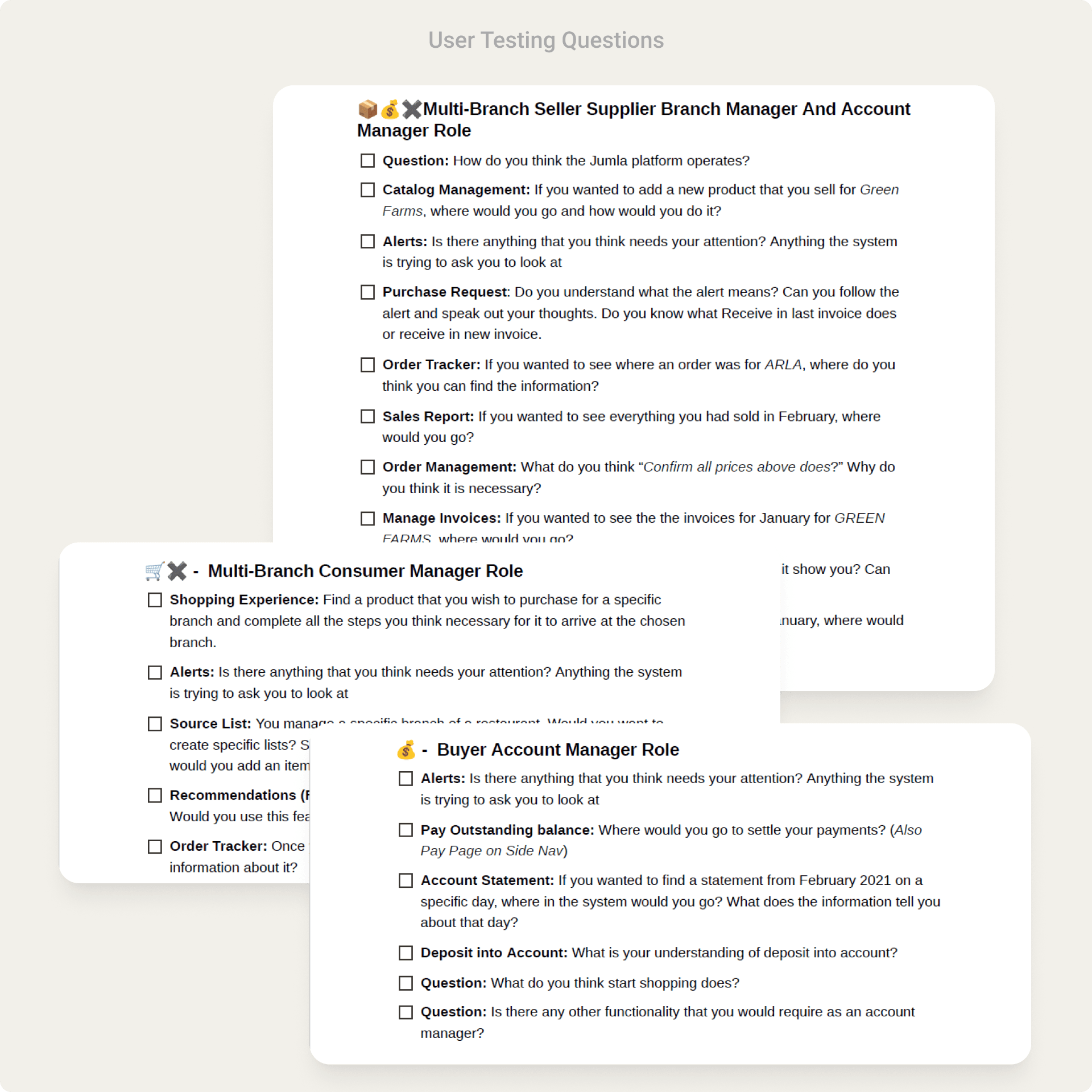
Beyond the core product flows, the project addressed additional requirements that influenced design decisions. This included defining user testing questions to validate feature changes, designing sales reporting views to support operational insight, and adapting the interface for both English and Arabic to support left-to-right and right-to-left layouts without breaking usability.
Designed and Developed by Ryan Duell

Designed and Developed by Ryan Duell

Designed and Developed by Ryan Duell