SA’s most effective online ticketing service.
SA’s most effective online ticketing service.
SA’s most effective online ticketing service.
Quicket is a fast and effective online ticketing service for events of all sizes.
Quicket is a fast and effective online ticketing service for events of all sizes.
Ecommerce
🇿🇦 ZA Client
Dashboard
Landing Page
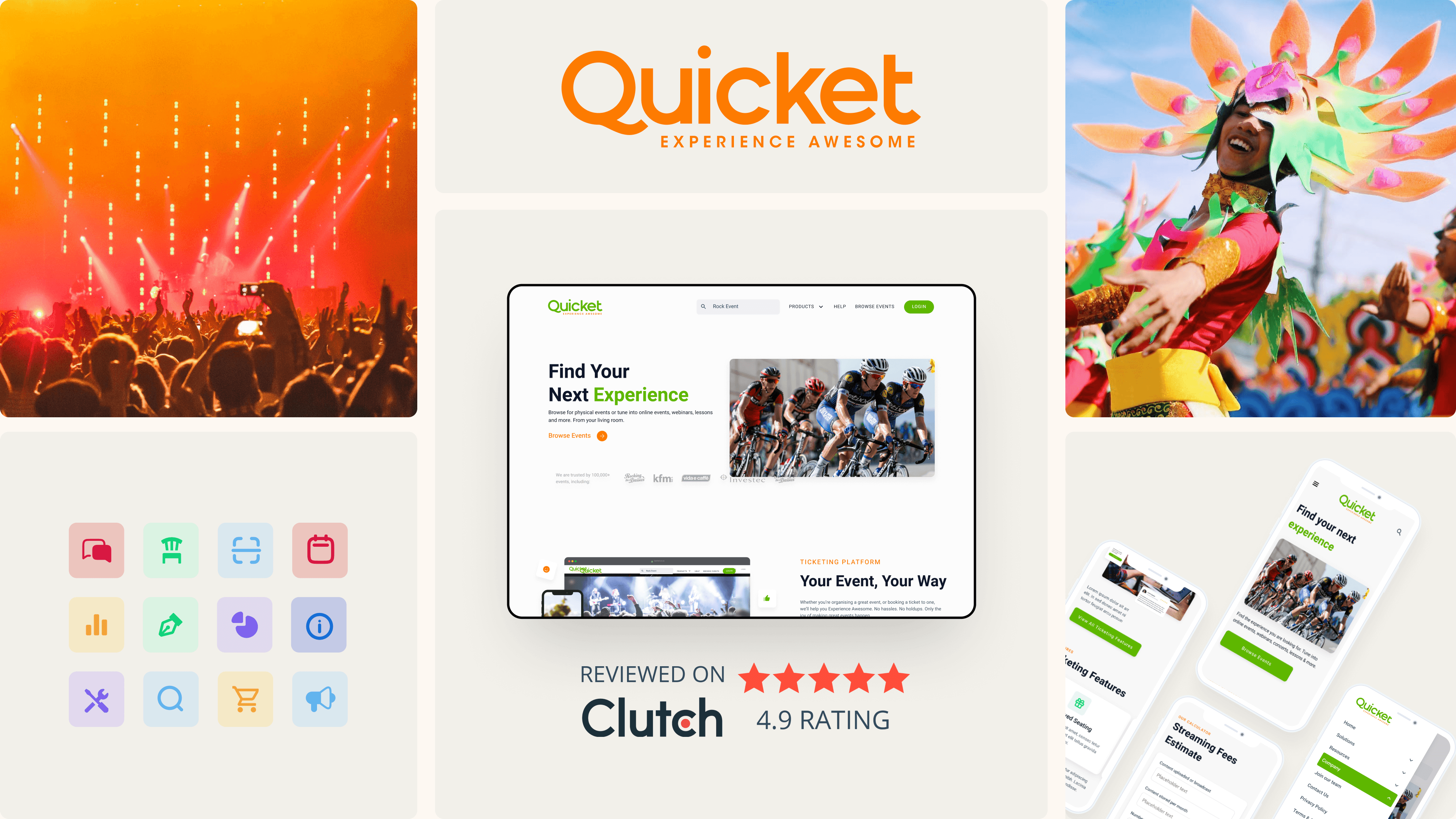
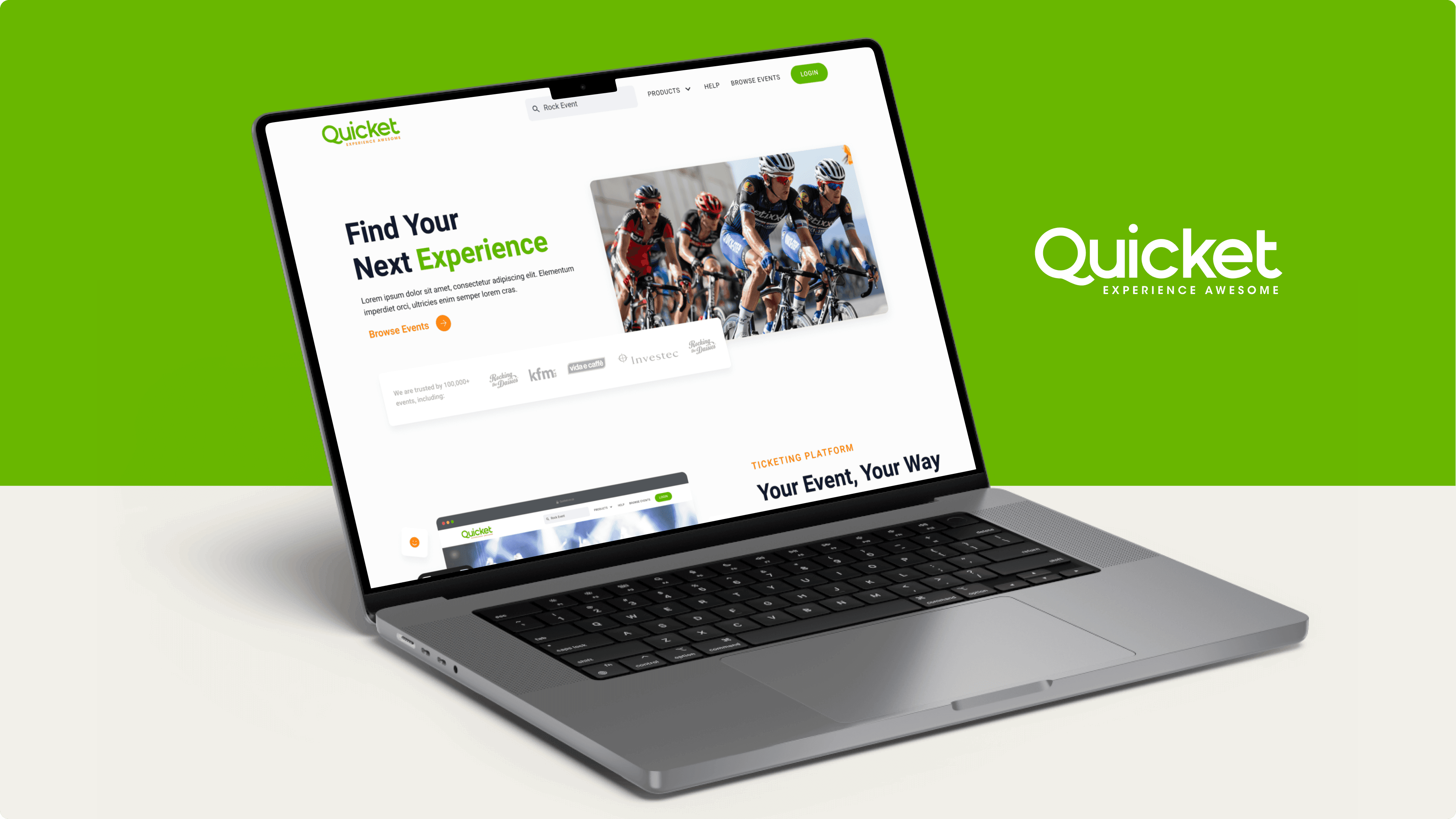
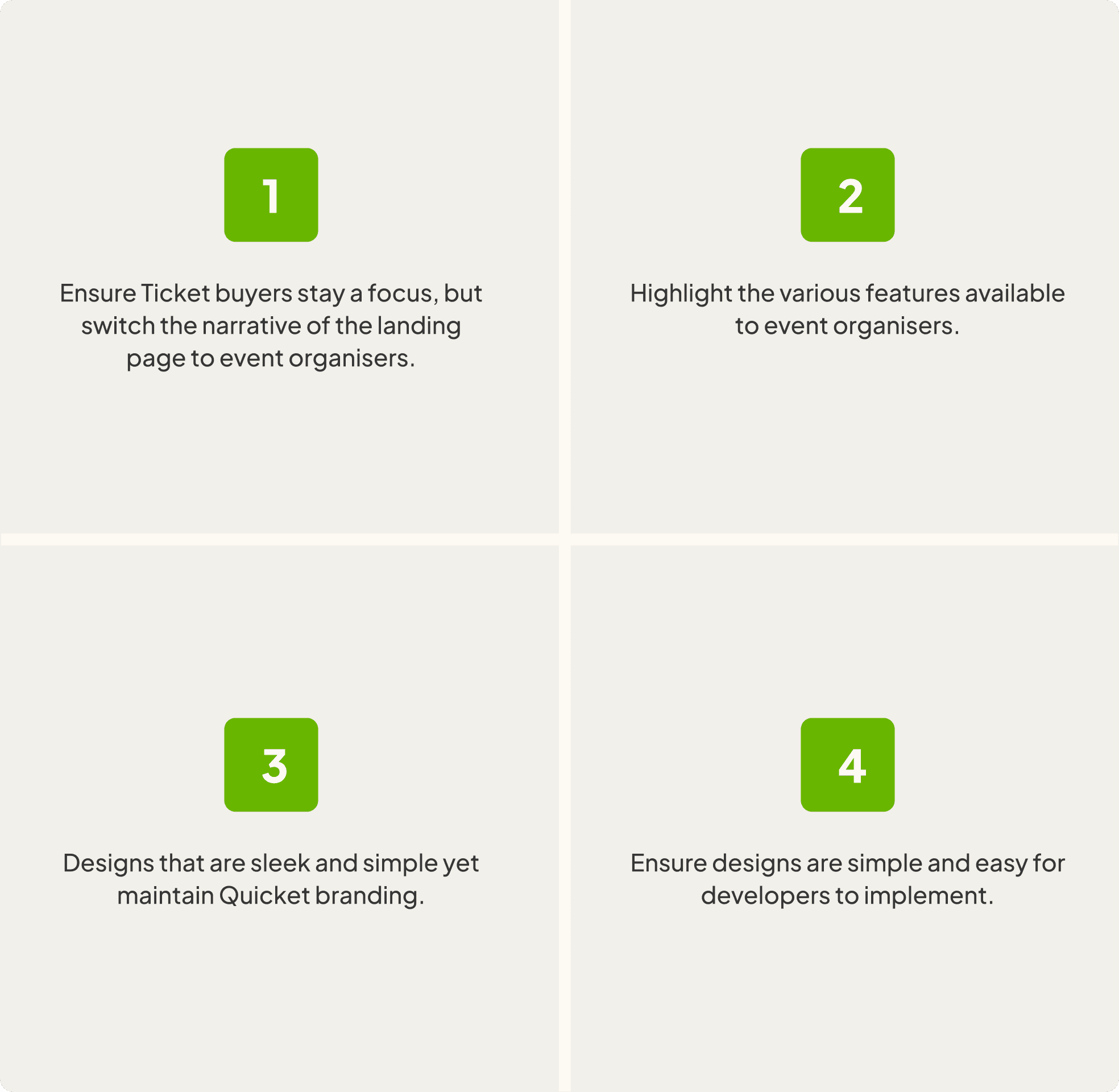
Problem statement
Problem statement
Problem statement
The Quicket landing page was designed to support event discovery, but usage data showed that most ticket buyers arrived directly on event pages via shared links. While purchases remained stable, event creation by organisers lagged. The design challenge shifted to repositioning the landing page and event management tools to better support organisers and encourage new event setup.
The Quicket landing page was designed to support event discovery, but usage data showed that most ticket buyers arrived directly on event pages via shared links. While purchases remained stable, event creation by organisers lagged. The design challenge shifted to repositioning the landing page and event management tools to better support organisers and encourage new event setup.
The Quicket landing page was designed to support event discovery, but usage data showed that most ticket buyers arrived directly on event pages via shared links. While purchases remained stable, event creation by organisers lagged. The design challenge shifted to repositioning the landing page and event management tools to better support organisers and encourage new event setup.
Project Process.
Project Process.
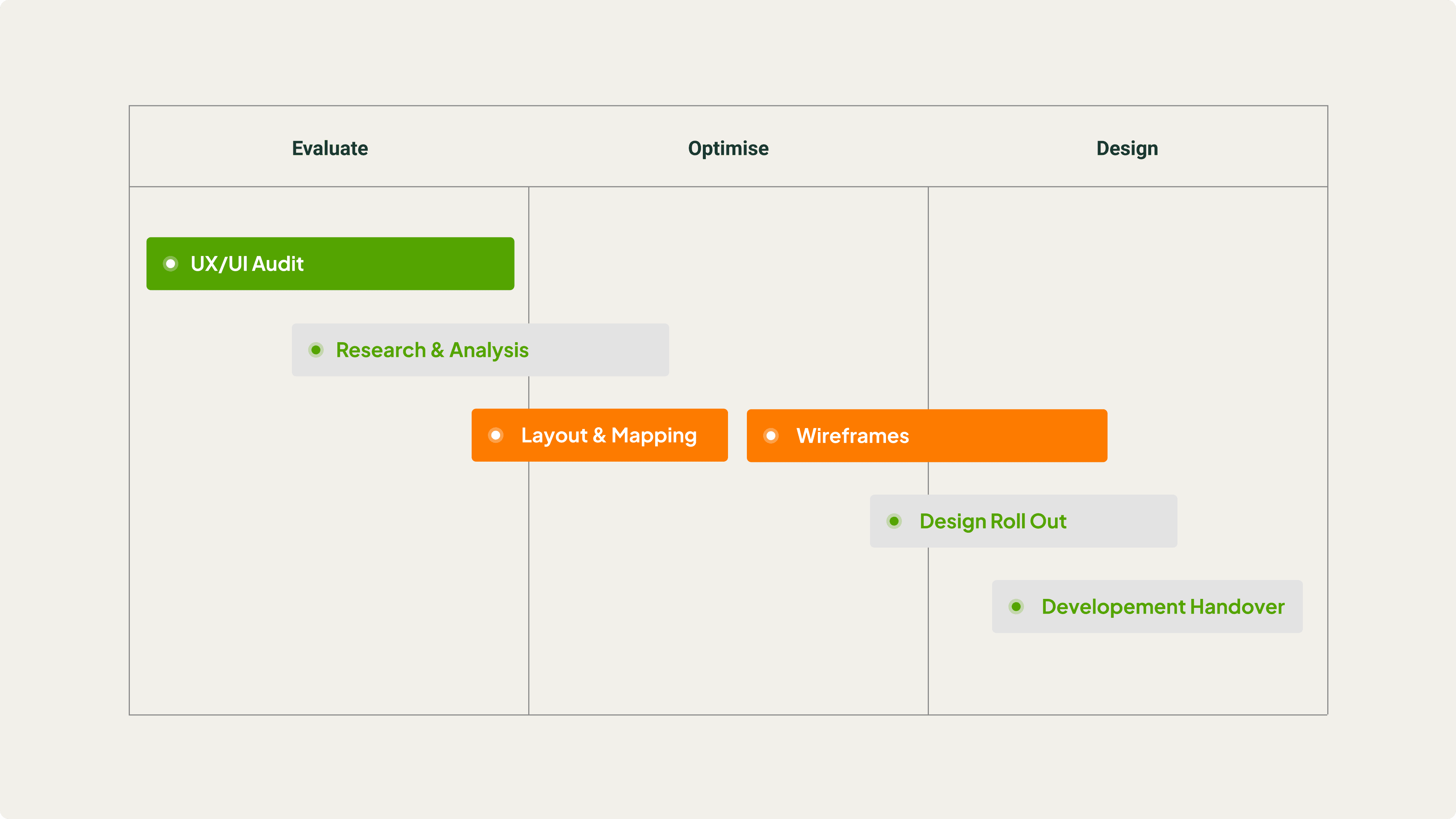
The project followed a three-month, phased approach. We began by evaluating the existing experience to clarify the problem, used behavioural and performance data to define optimisation priorities, and then prepared the refined designs for handover and development.
The project followed a three-month, phased approach. We began by evaluating the existing experience to clarify the problem, used behavioural and performance data to define optimisation priorities, and then prepared the refined designs for handover and development.
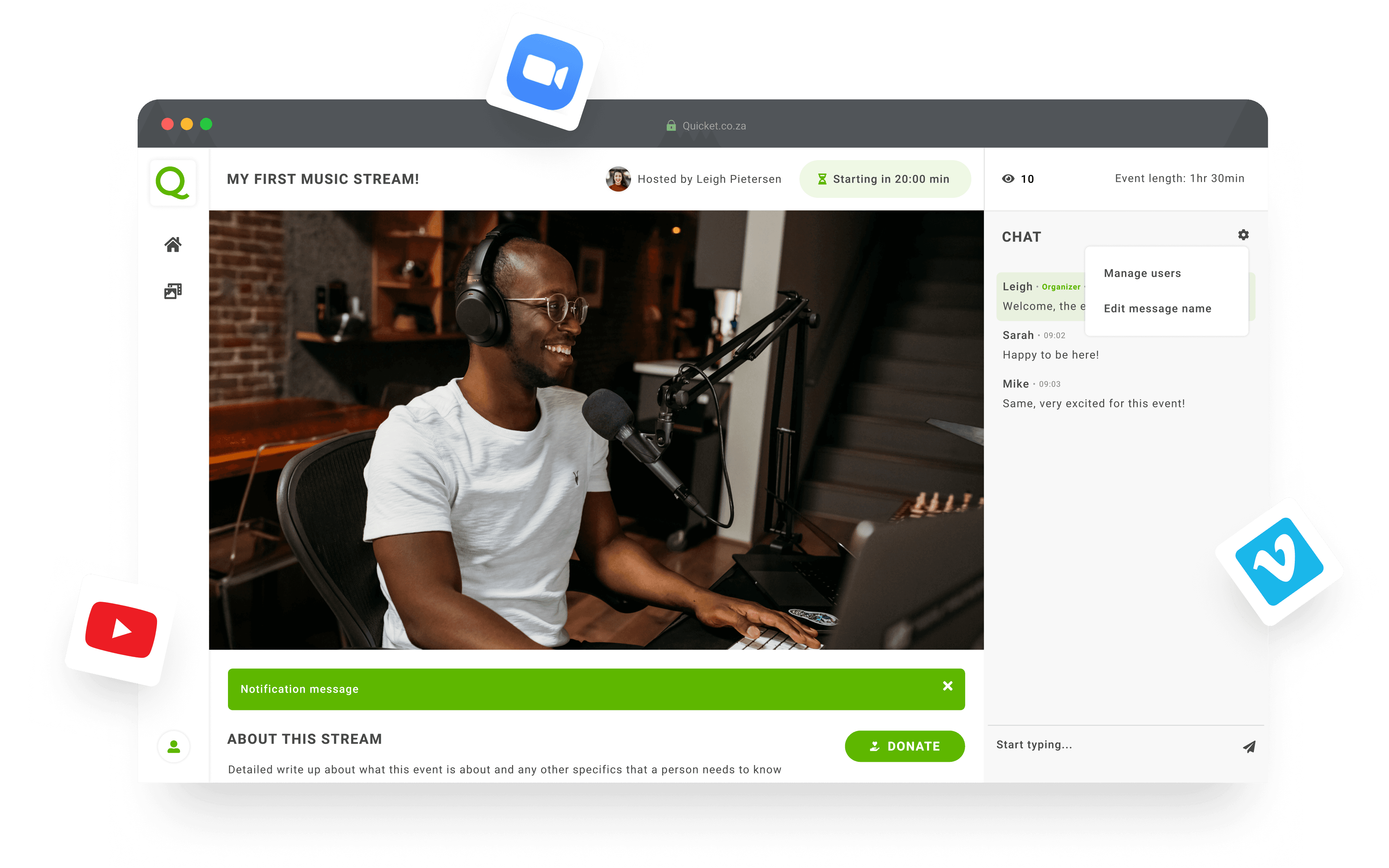
Design Audit
Design Audit
We reviewed the existing Quicket experience to identify gaps in visual consistency and usability. The audit focused primarily on UI patterns, with key UX issues included where they impacted clarity or flow. The findings were used to highlight areas requiring refinement before optimisation work began.
We reviewed the existing Quicket experience to identify gaps in visual consistency and usability. The audit focused primarily on UI patterns, with key UX issues included where they impacted clarity or flow. The findings were used to highlight areas requiring refinement before optimisation work began.
Iconography
Iconography
Iconography
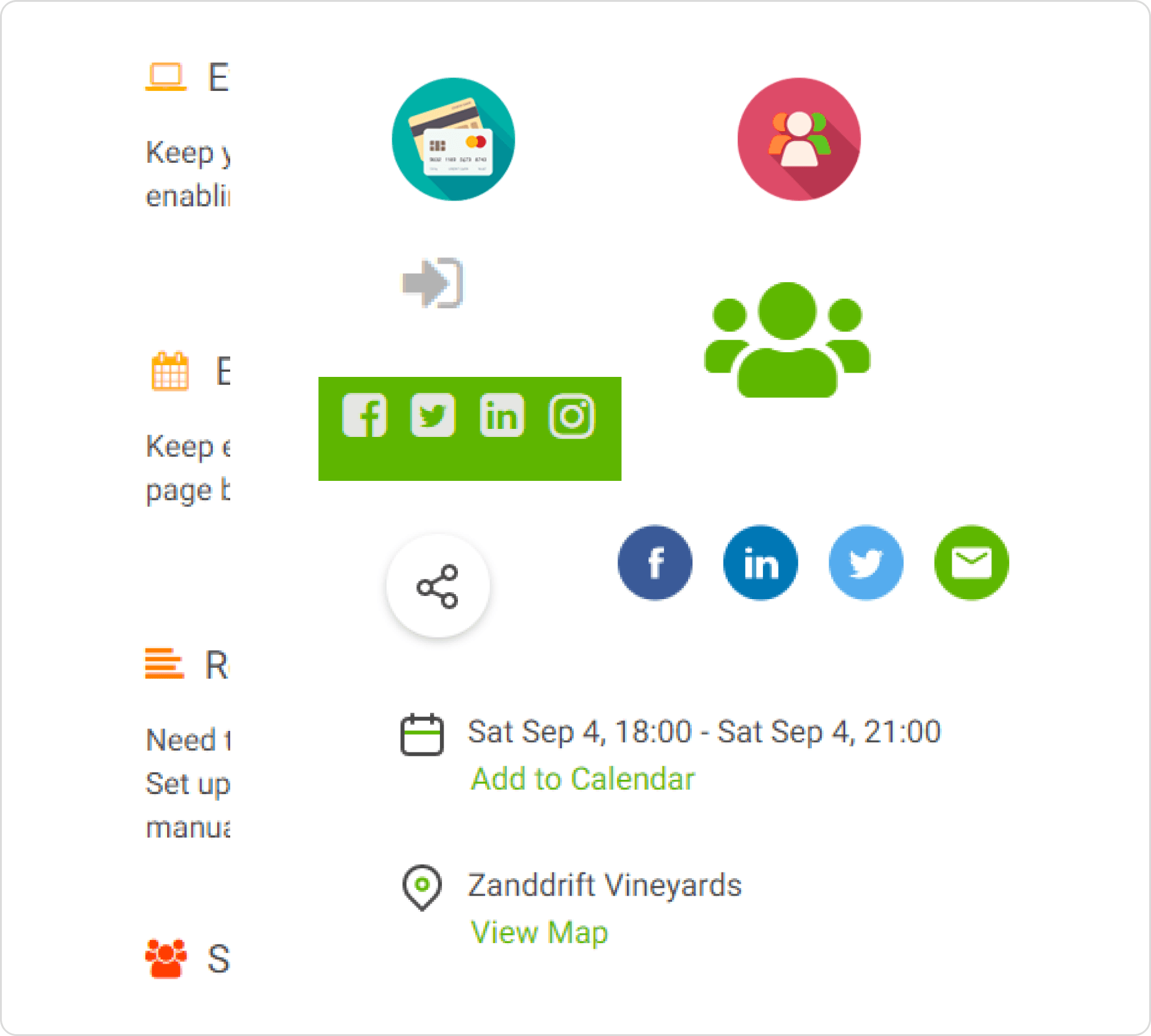
The audit identified inconsistent use of icon styles across the site, including a mix of outline, filled, coloured, and custom-styled icons. This reduced visual cohesion and made interface elements feel less predictable.
The audit identified inconsistent use of icon styles across the site, including a mix of outline, filled, coloured, and custom-styled icons. This reduced visual cohesion and made interface elements feel less predictable.
The audit identified inconsistent use of icon styles across the site, including a mix of outline, filled, coloured, and custom-styled icons. This reduced visual cohesion and made interface elements feel less predictable.
Buttons
Buttons
Buttons
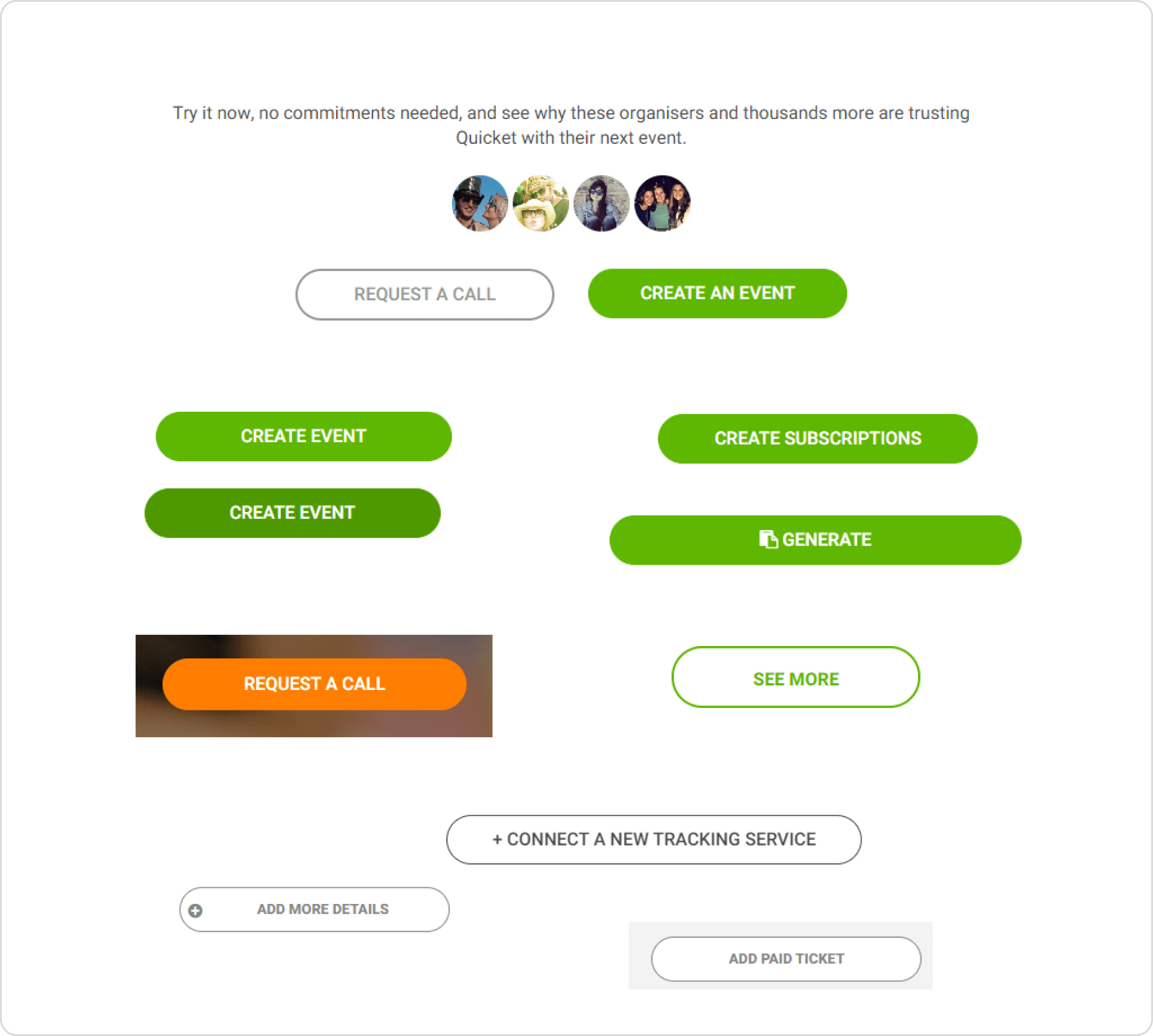
Inconsistent buttons (Flat, Outline & Hover)
Secondary state differs depending on where you are in the application.
Certain Call to Actions have icons, others do not.
In some instances the main Call to Action is a secondary button style.
Some buttons have a hover state.
Limited use of secondary colour (orange).
Inconsistent buttons (Flat, Outline & Hover)
Secondary state differs depending on where you are in the application.
Certain Call to Actions have icons, others do not.
In some instances the main Call to Action is a secondary button style.
Some buttons have a hover state.
Limited use of secondary colour (orange).
Saturation
Saturation
Saturation
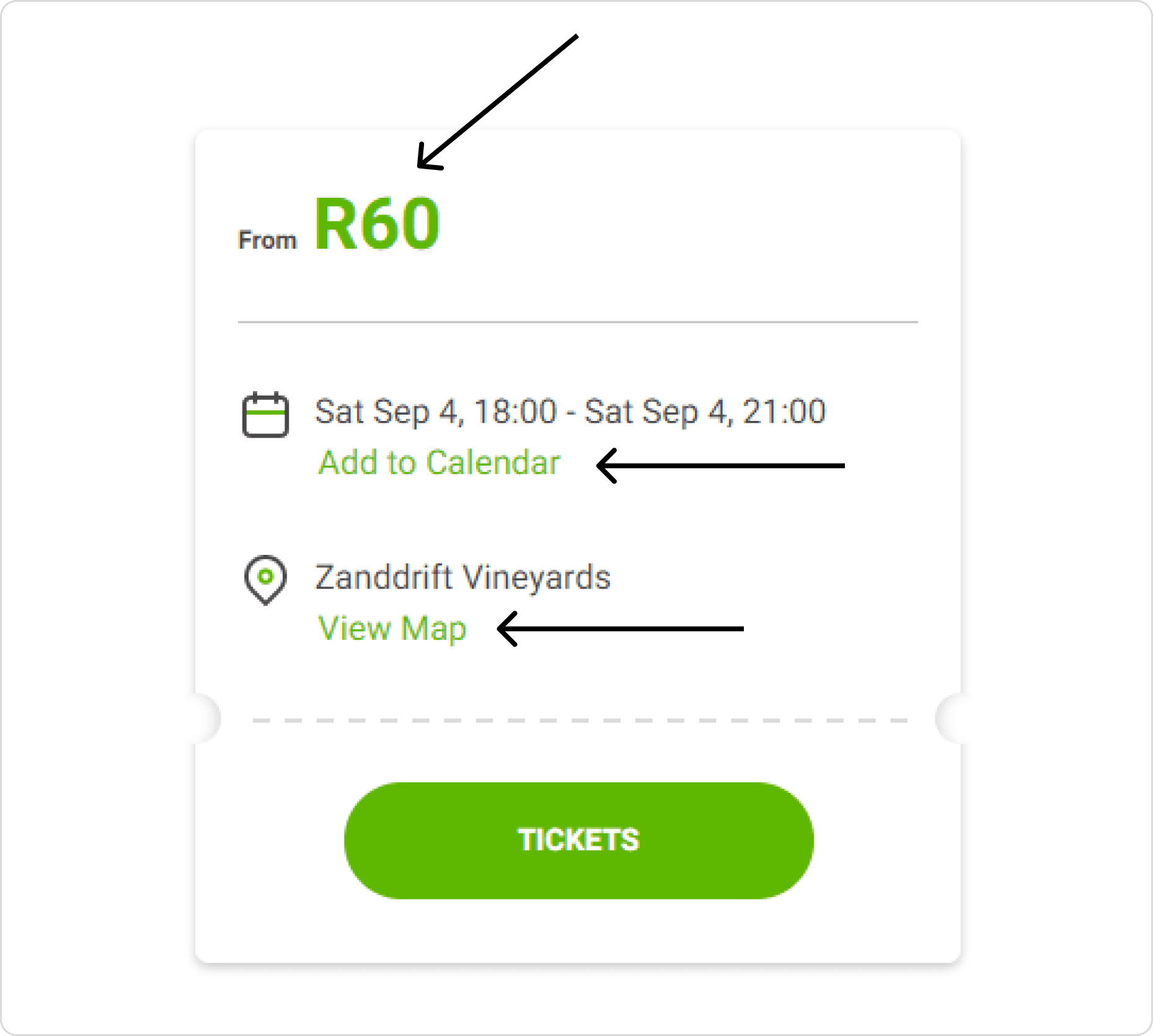
The primary colour was overused, while secondary colours were rarely applied. This reduced visual contrast and made it difficult for users to quickly identify the primary call to action on a page.
The primary colour was overused, while secondary colours were rarely applied. This reduced visual contrast and made it difficult for users to quickly identify the primary call to action on a page.
The primary colour was overused, while secondary colours were rarely applied. This reduced visual contrast and made it difficult for users to quickly identify the primary call to action on a page.
Researching competitors
Researching competitors
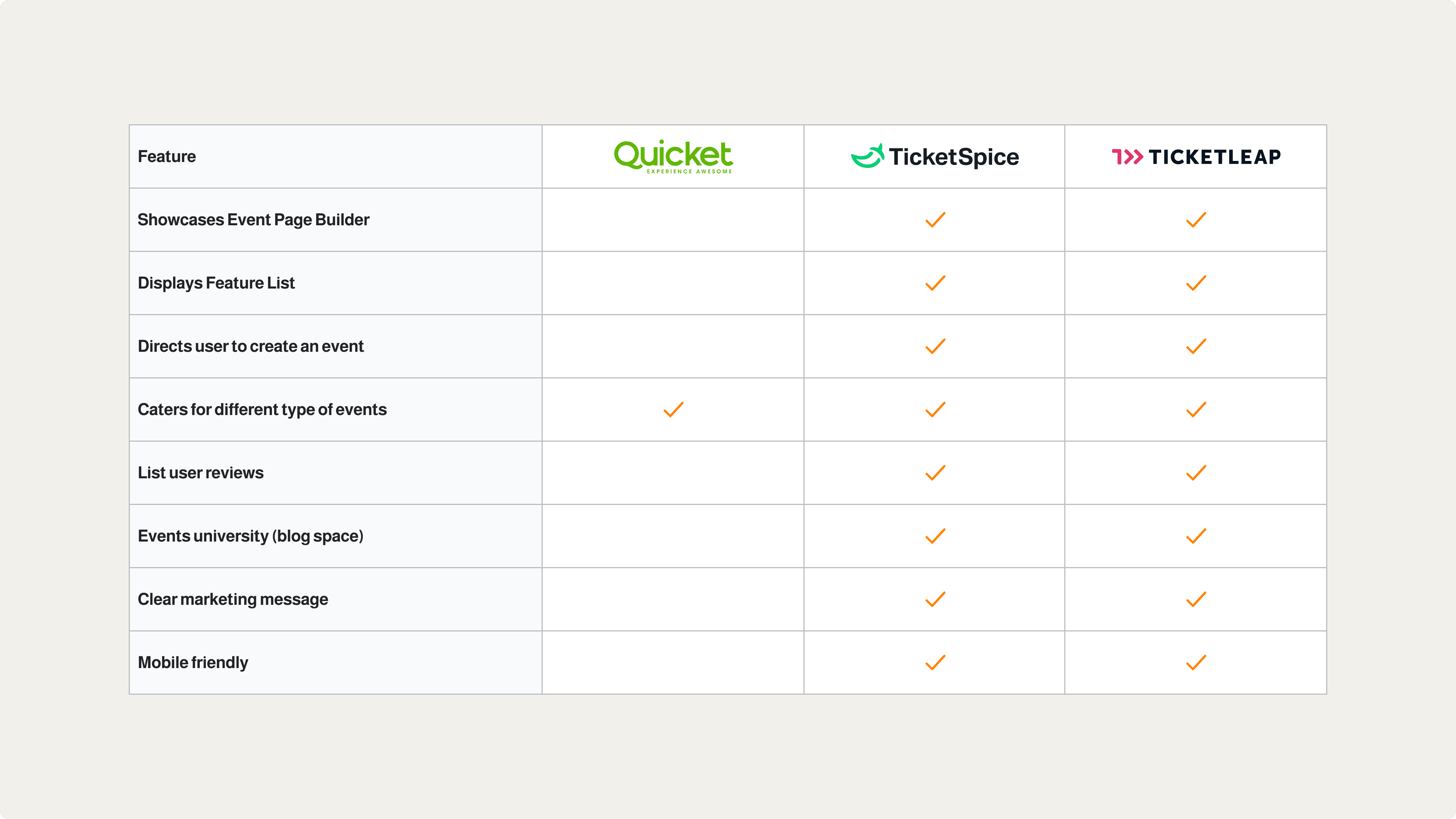
We analysed Ticketspice and Ticketleap to understand how Quicket compared against direct competitors. While Quicket offered similar functionality, competitor products communicated their value more clearly through stronger messaging and feature visibility. This highlighted a perception gap, where Quicket’s capabilities were underrepresented despite being present.
We analysed Ticketspice and Ticketleap to understand how Quicket compared against direct competitors. While Quicket offered similar functionality, competitor products communicated their value more clearly through stronger messaging and feature visibility. This highlighted a perception gap, where Quicket’s capabilities were underrepresented despite being present.
Designs.
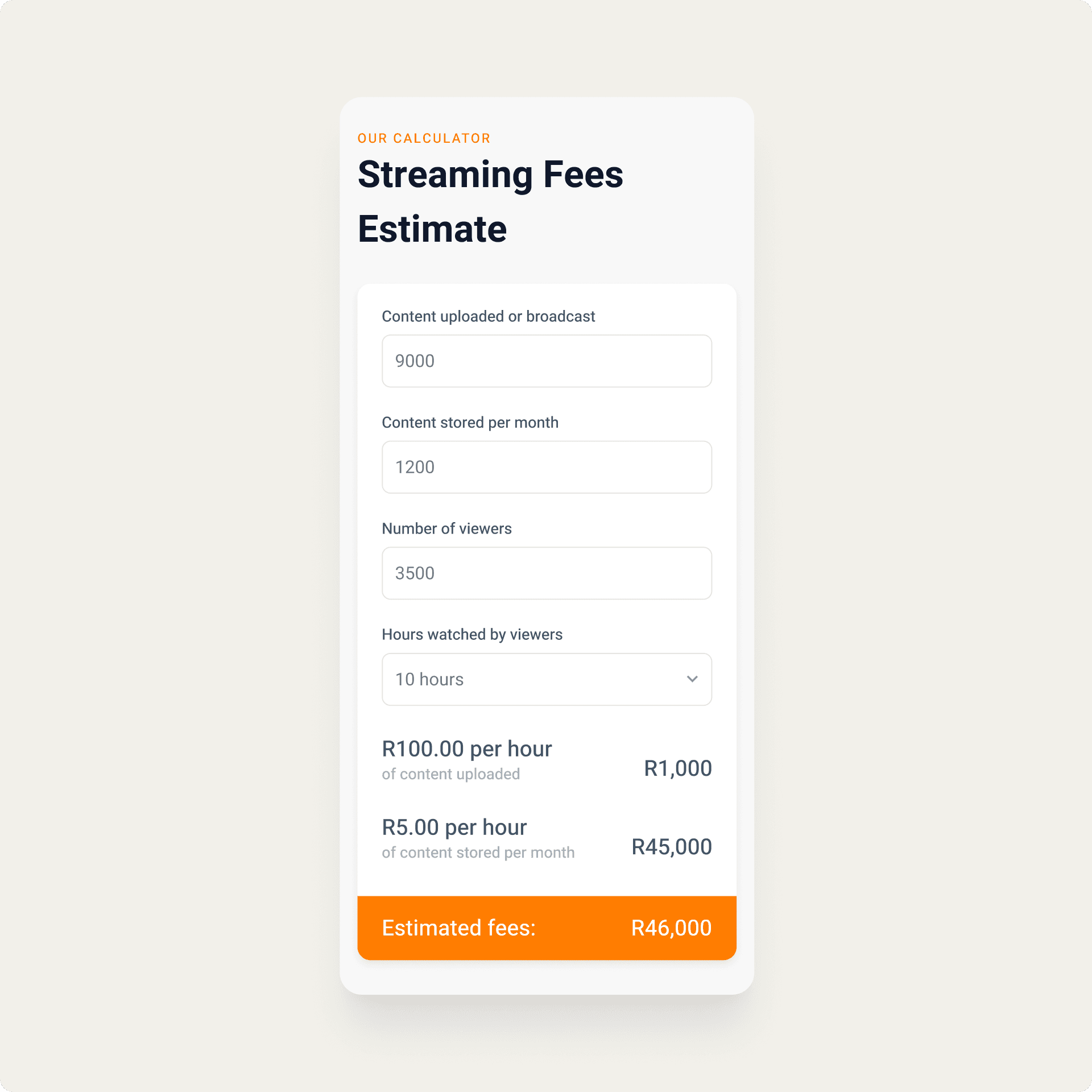
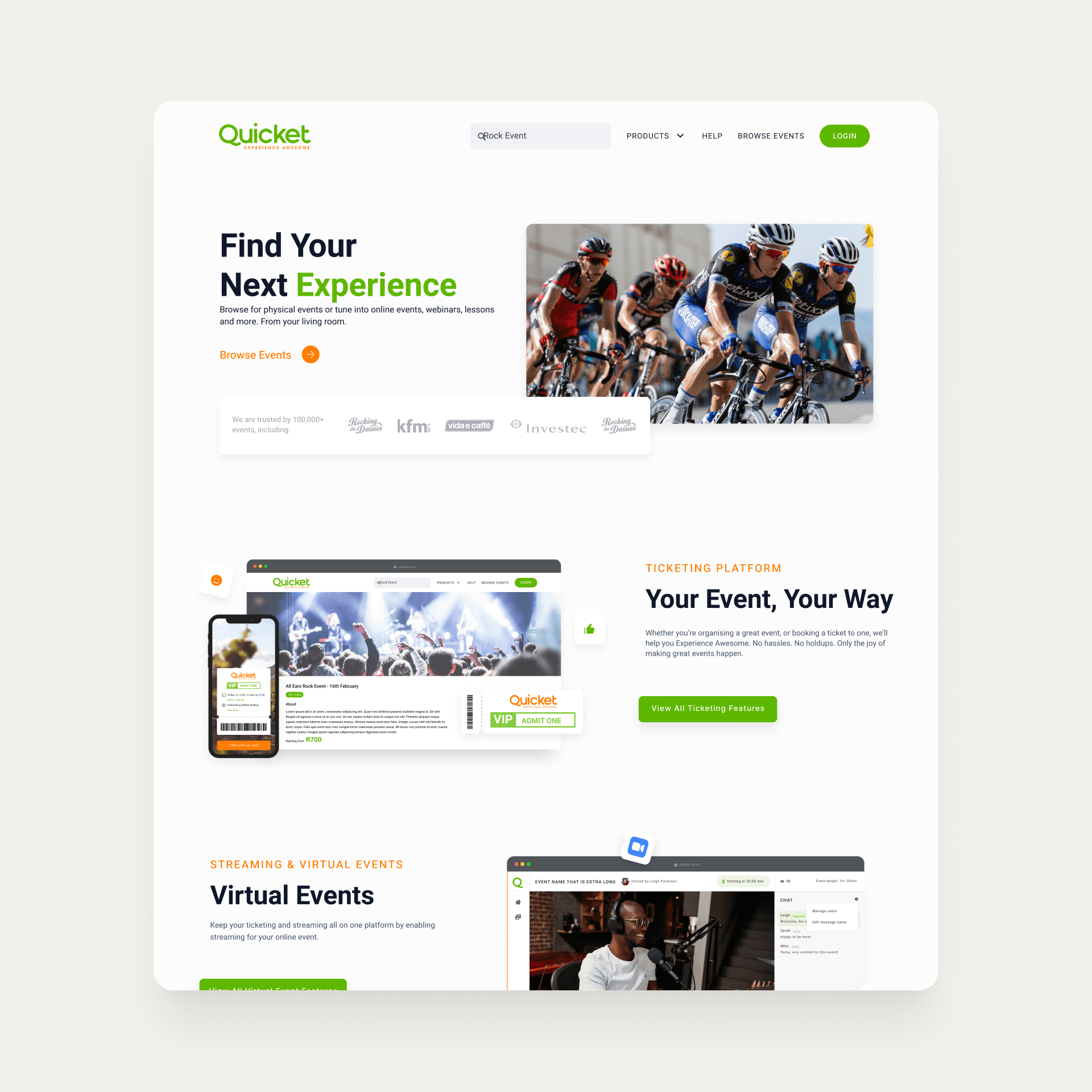
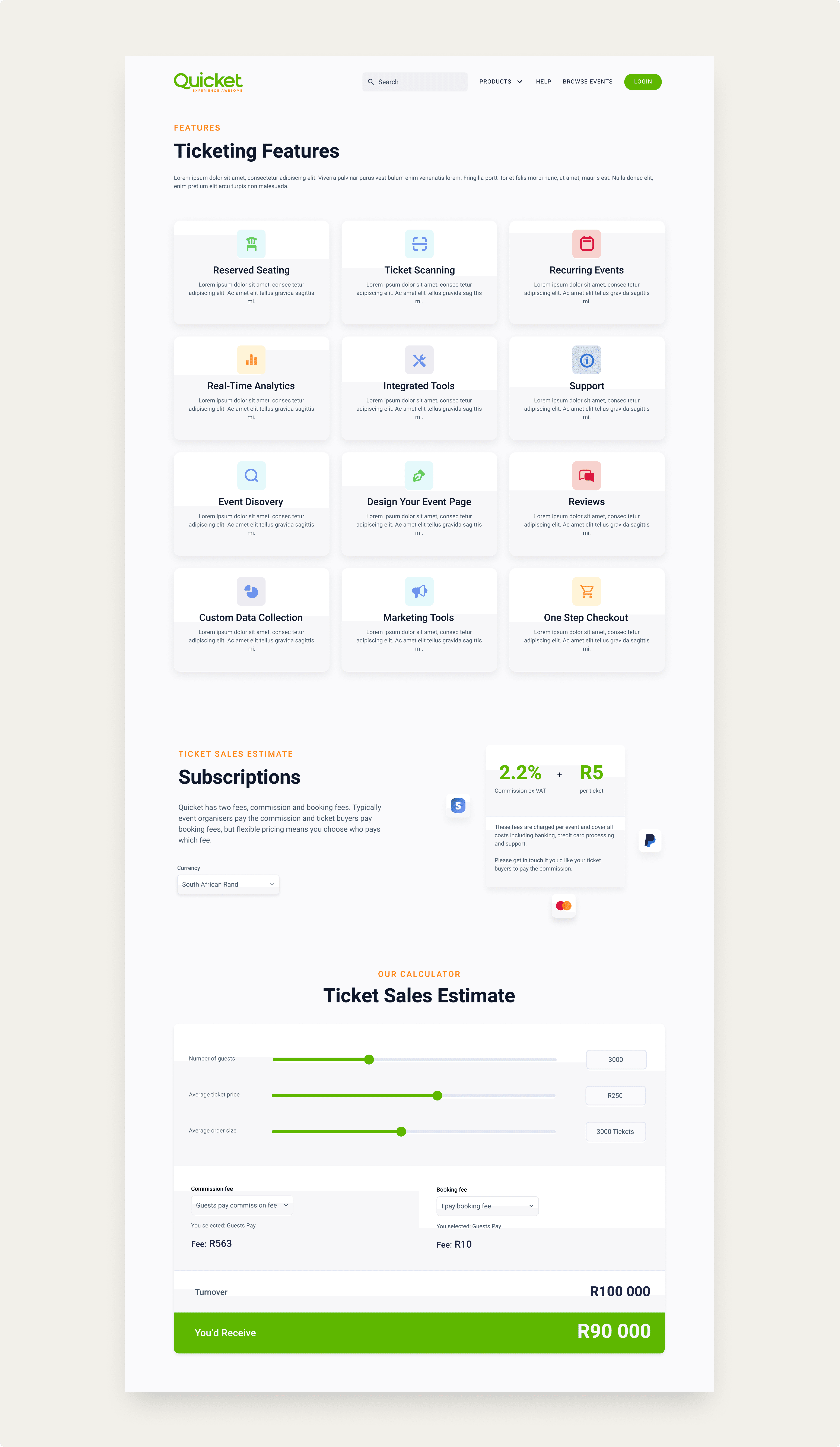
The final designs were refined through collaboration with stakeholders and developers, balancing business goals with technical constraints. Feedback was used to clarify hierarchy, improve feature visibility, and ensure the solution could be implemented without introducing unnecessary complexity.
The final designs were refined through collaboration with stakeholders and developers, balancing business goals with technical constraints. Feedback was used to clarify hierarchy, improve feature visibility, and ensure the solution could be implemented without introducing unnecessary complexity.


Scaling to mobile
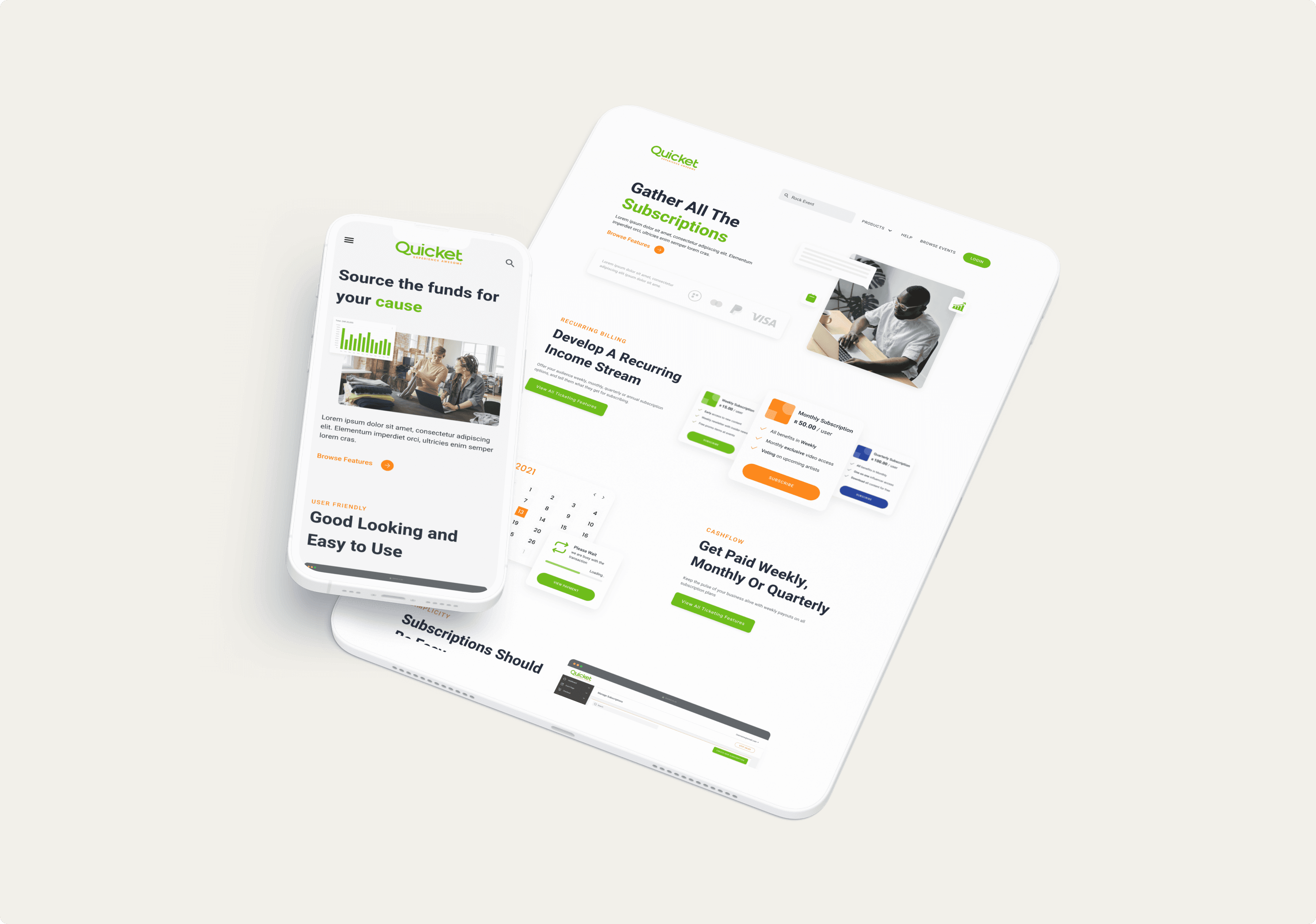
I adapted the web-based designs for mobile by prioritising content hierarchy and task completion on smaller screens. This required reworking layouts and navigation to reduce complexity, while applying mobile-native patterns only where they improved clarity and usability.
I adapted the web-based designs for mobile by prioritising content hierarchy and task completion on smaller screens. This required reworking layouts and navigation to reduce complexity, while applying mobile-native patterns only where they improved clarity and usability.
Development handover
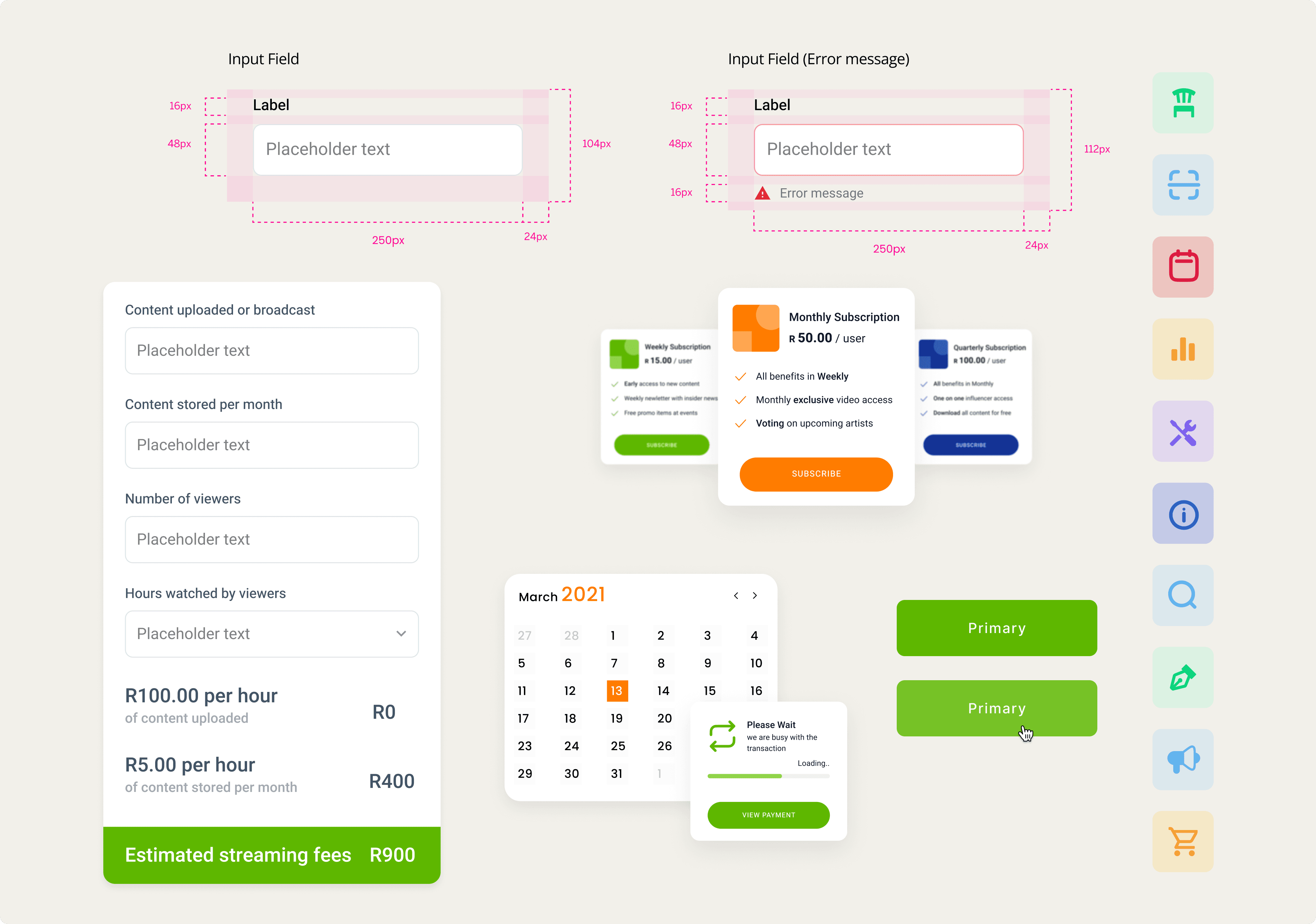
The handover documentation focused on reducing ambiguity during implementation. Components were clearly defined with spacing, sizing, and responsive behaviour, while interaction states such as errors and hovers were specified upfront. Reusable elements, including subscription cards and icons, were documented to support consistency and efficient development.
The handover documentation focused on reducing ambiguity during implementation. Components were clearly defined with spacing, sizing, and responsive behaviour, while interaction states such as errors and hovers were specified upfront. Reusable elements, including subscription cards and icons, were documented to support consistency and efficient development.
"Ryan’s insights and understanding of the project goal earned positive remarks from us. He provided guidance on every aspect of the business and ensured smooth collaboration with the internal team."

James Hedley
Director, Quicket
"Ryan’s insights and understanding of the project goal earned positive remarks from us. He provided guidance on every aspect of the business and ensured smooth collaboration with the internal team."
James Hedley
Director, Quicket
"Ryan’s insights and understanding of the project goal earned positive remarks from us. He provided guidance on every aspect of the business and ensured smooth collaboration with the internal team."
James Hedley
Director, Quicket
"Ryan’s insights and understanding of the project goal earned positive remarks from us. He provided guidance on every aspect of the business and ensured smooth collaboration with the internal team."
James Hedley
Director, Quicket
Project highlights
Project highlights
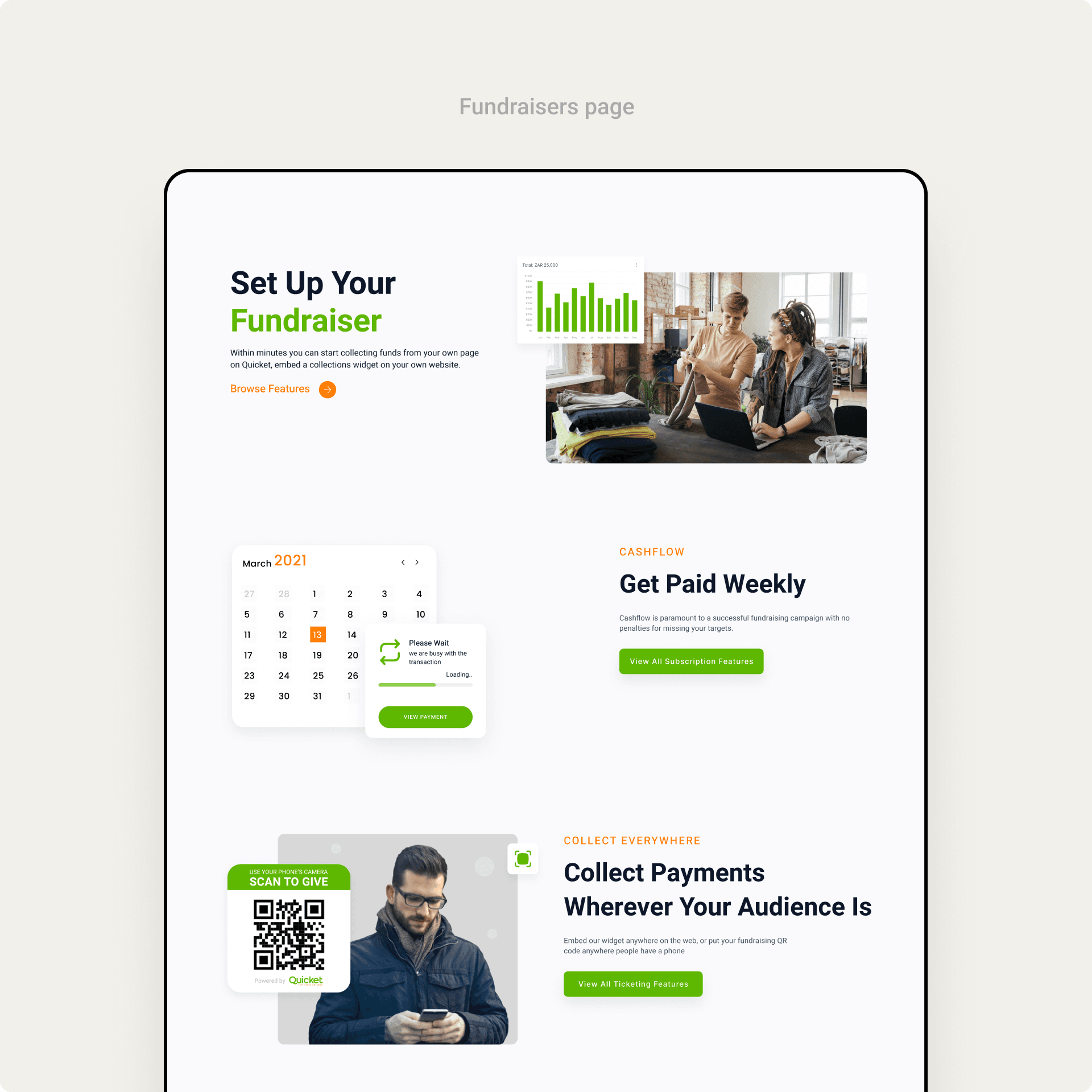
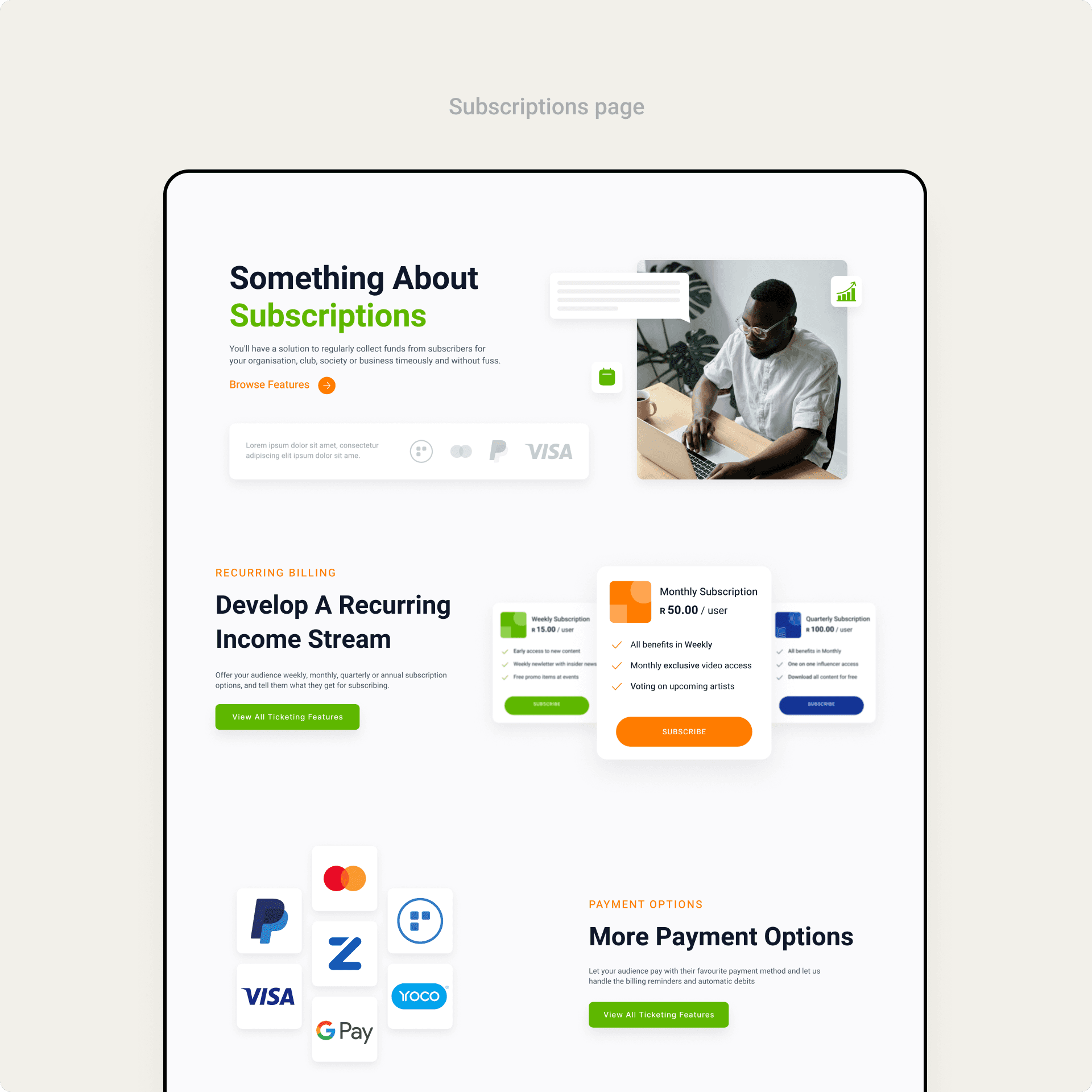
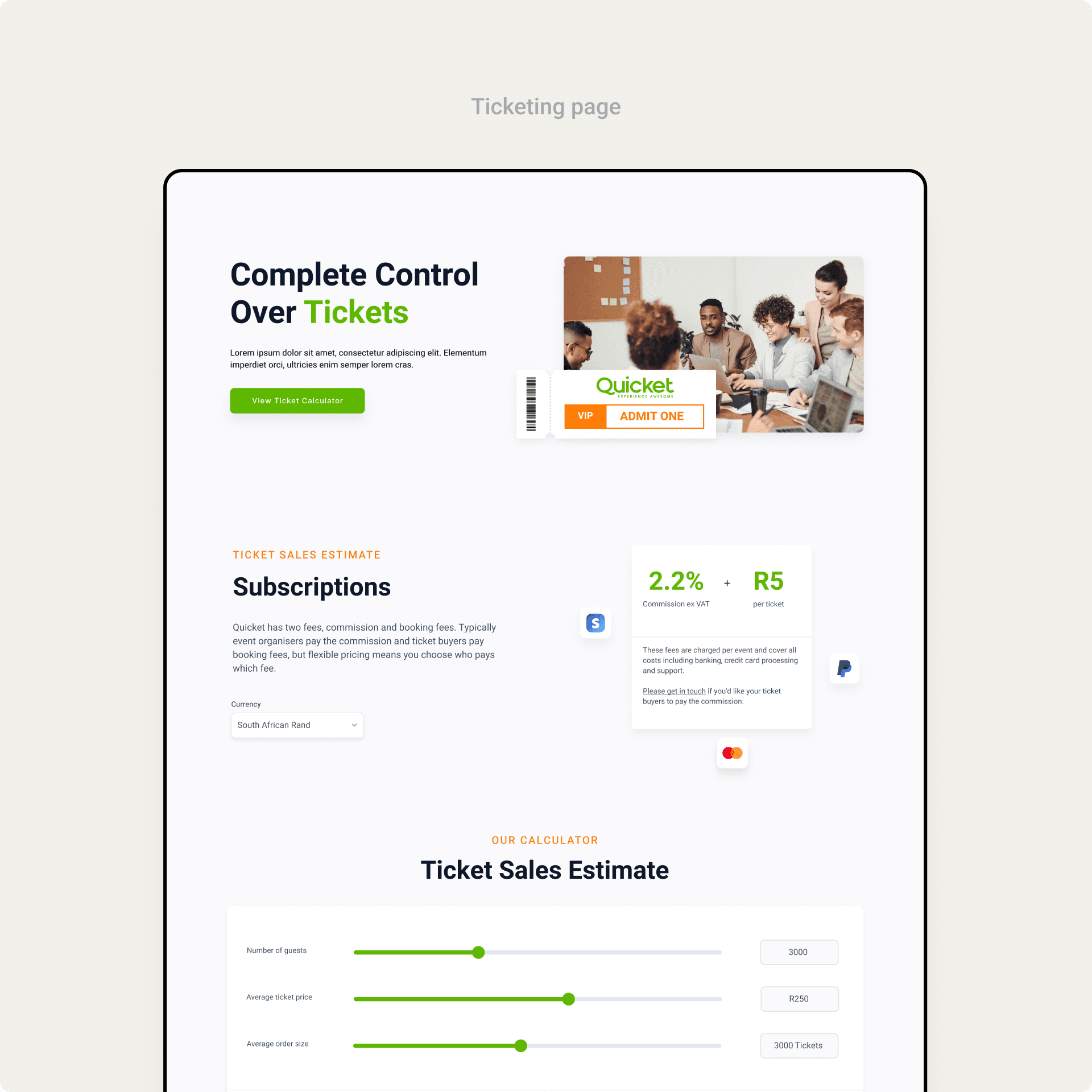
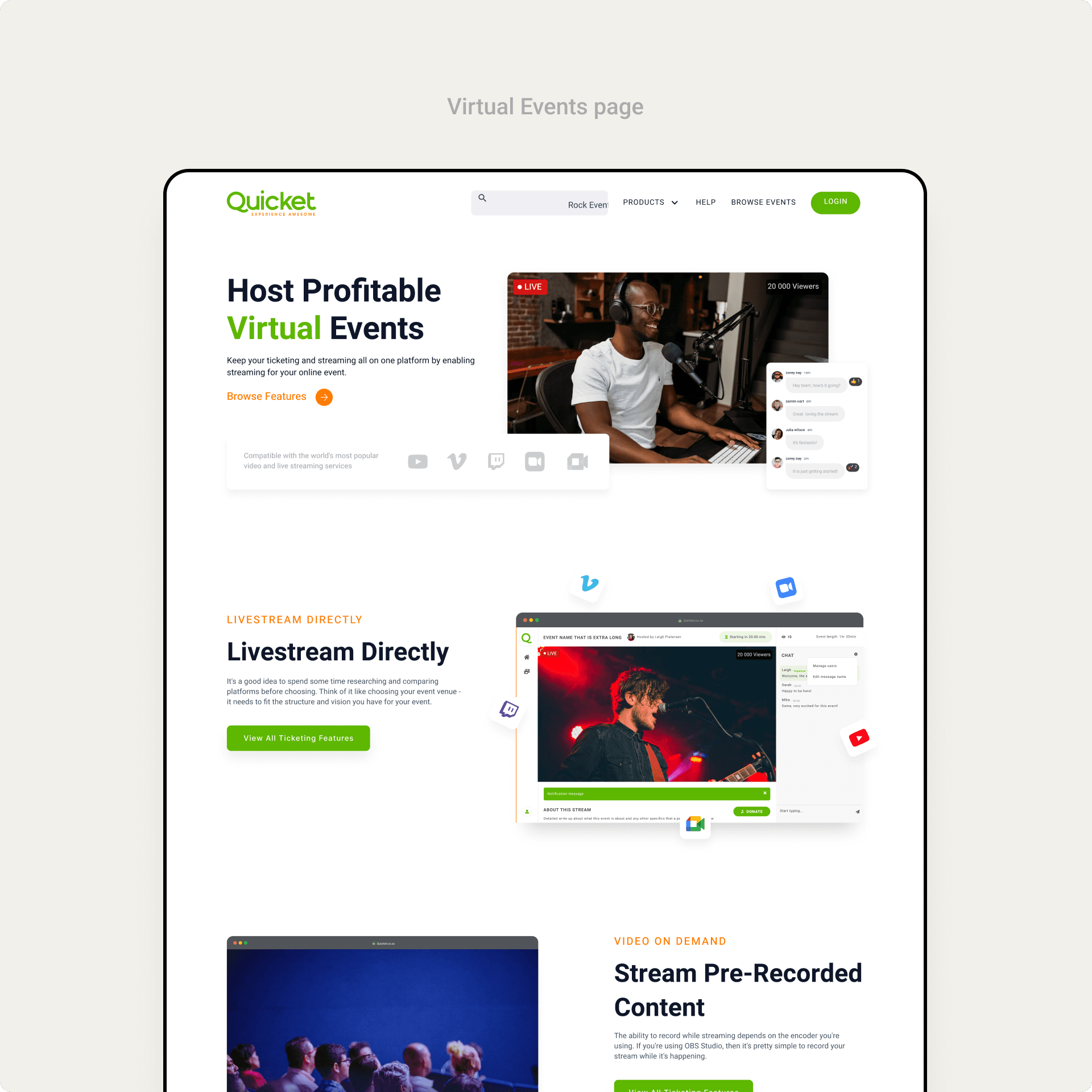
The screens below showcase key areas of the Quicket platform, including organiser-focused landing pages and tools for ticketing, fundraisers, and subscriptions. Each design prioritises clarity and task completion, supporting organisers across setup, promotion, and sales without adding unnecessary complexity.
Explore All Case Studies
Explore All Case Studies
View case studies for funded startups and established global companies
View case studies for funded startups and established global companies
View case studies for funded startups and established global companies
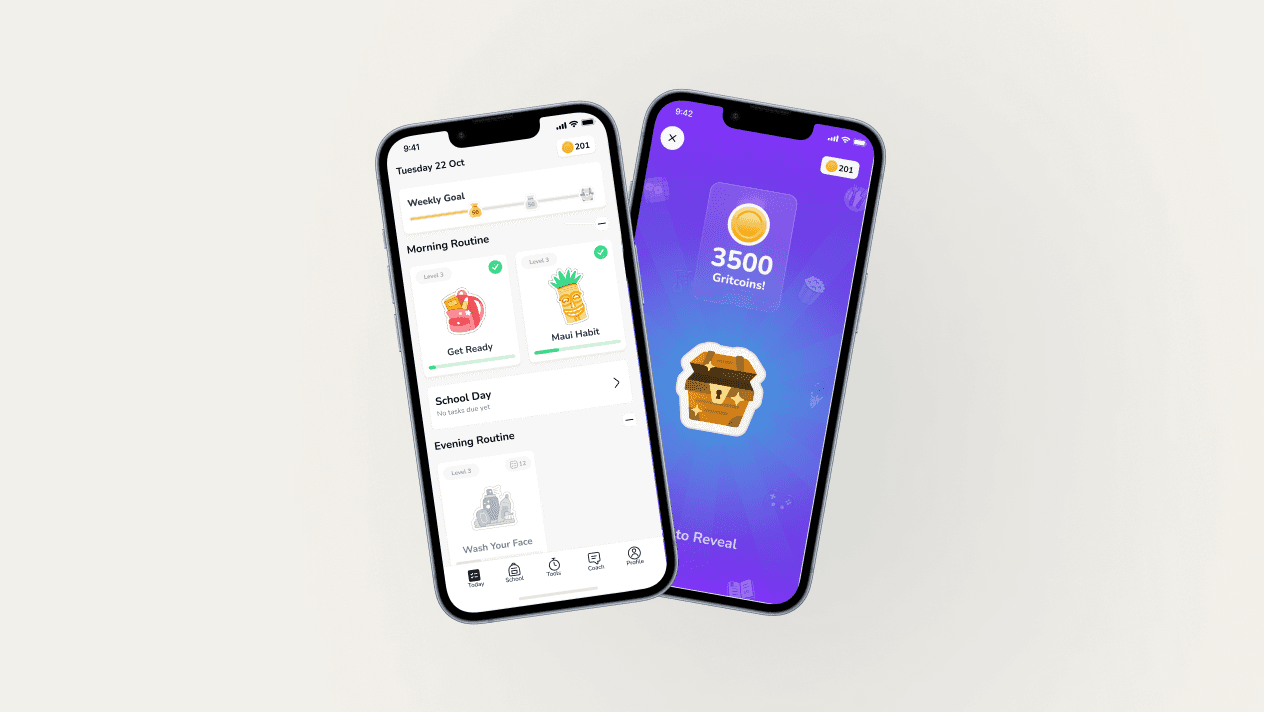
Coachbit: A Behavior-Driven Learning Platform
Empowering students to build lifelong skills through personalized coaching, daily accountability, and a habit-based curriculum.
Empowering students to build lifelong skills through personalized coaching, daily accountability, and a habit-based curriculum.
EdTech
🇺🇸 US Client
App
View project
View project
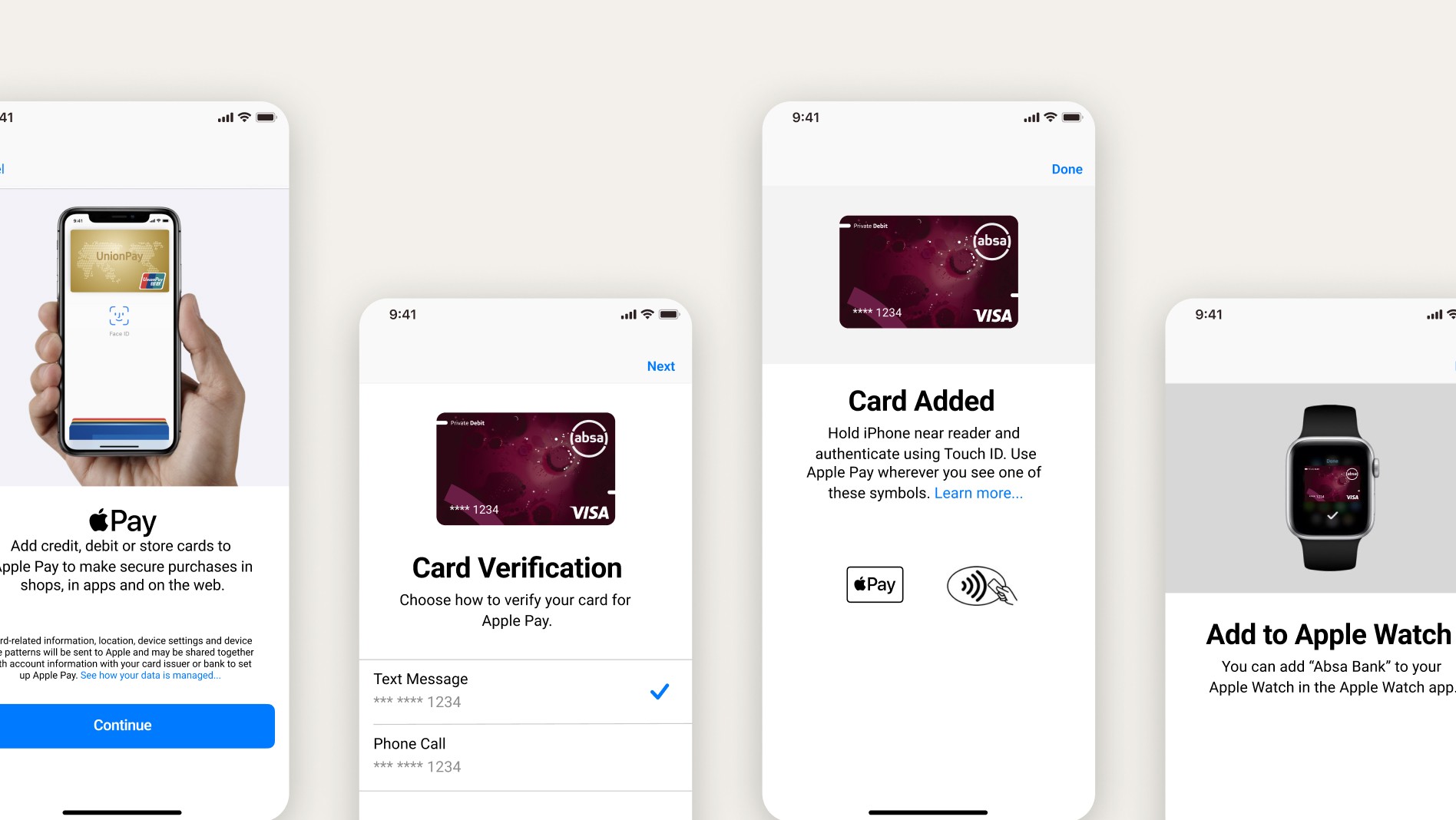
Absa: Pay with a virtual card, anywhere.
Absa is a South African bank which offers millions of South Africans personal and business banking, credit cards, investment banking and bank assurance.
Absa is a South African bank which offers millions of South Africans personal and business banking, credit cards, investment banking and bank assurance.
FinTech
🇿🇦 ZA Client
App
View project
View project
Designed and Developed by Ryan Duell
Designed and Developed by Ryan Duell
Designed and Developed by Ryan Duell